An Architect-Designed Olive Grove House for Two on Western Tinos, Cyclades
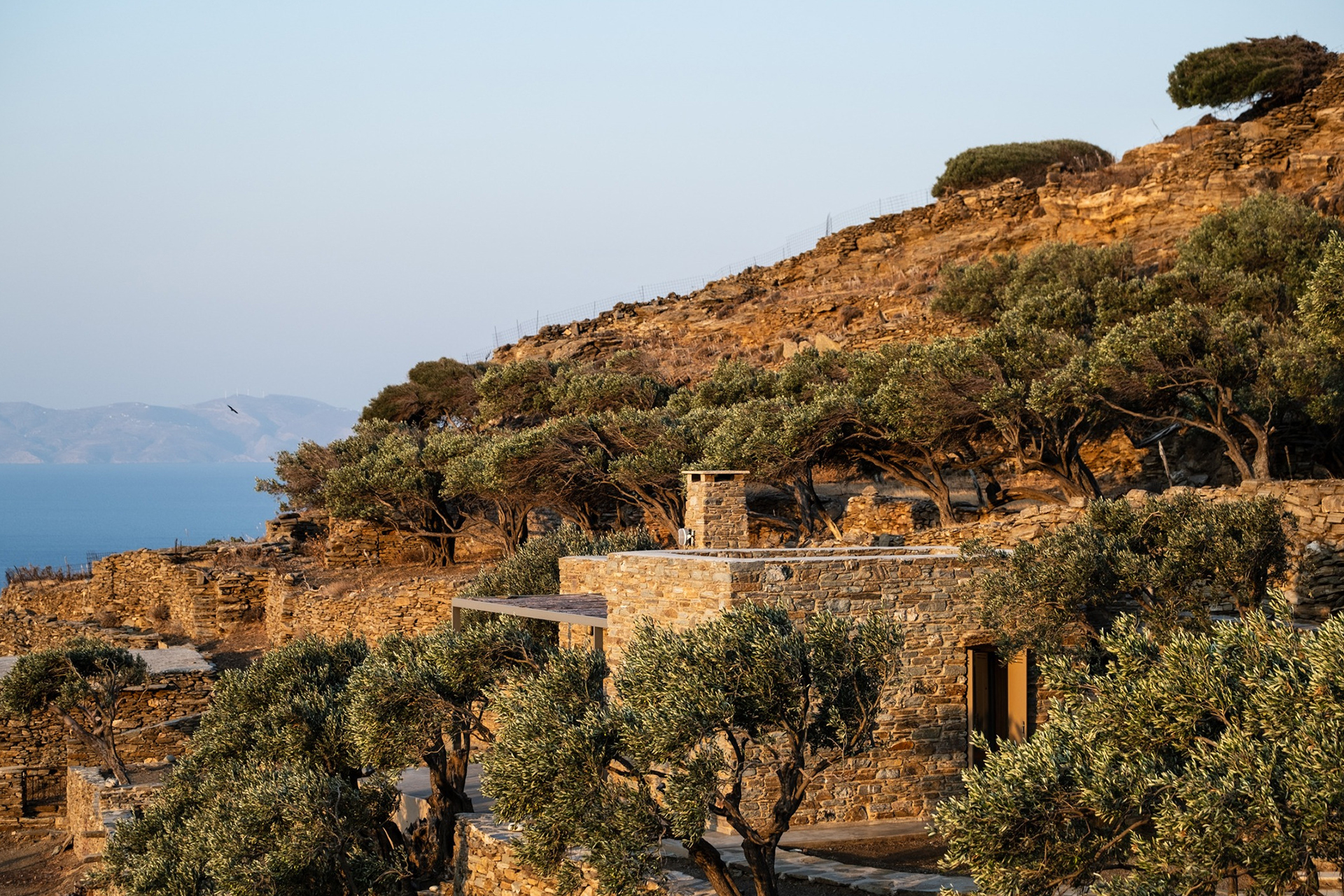
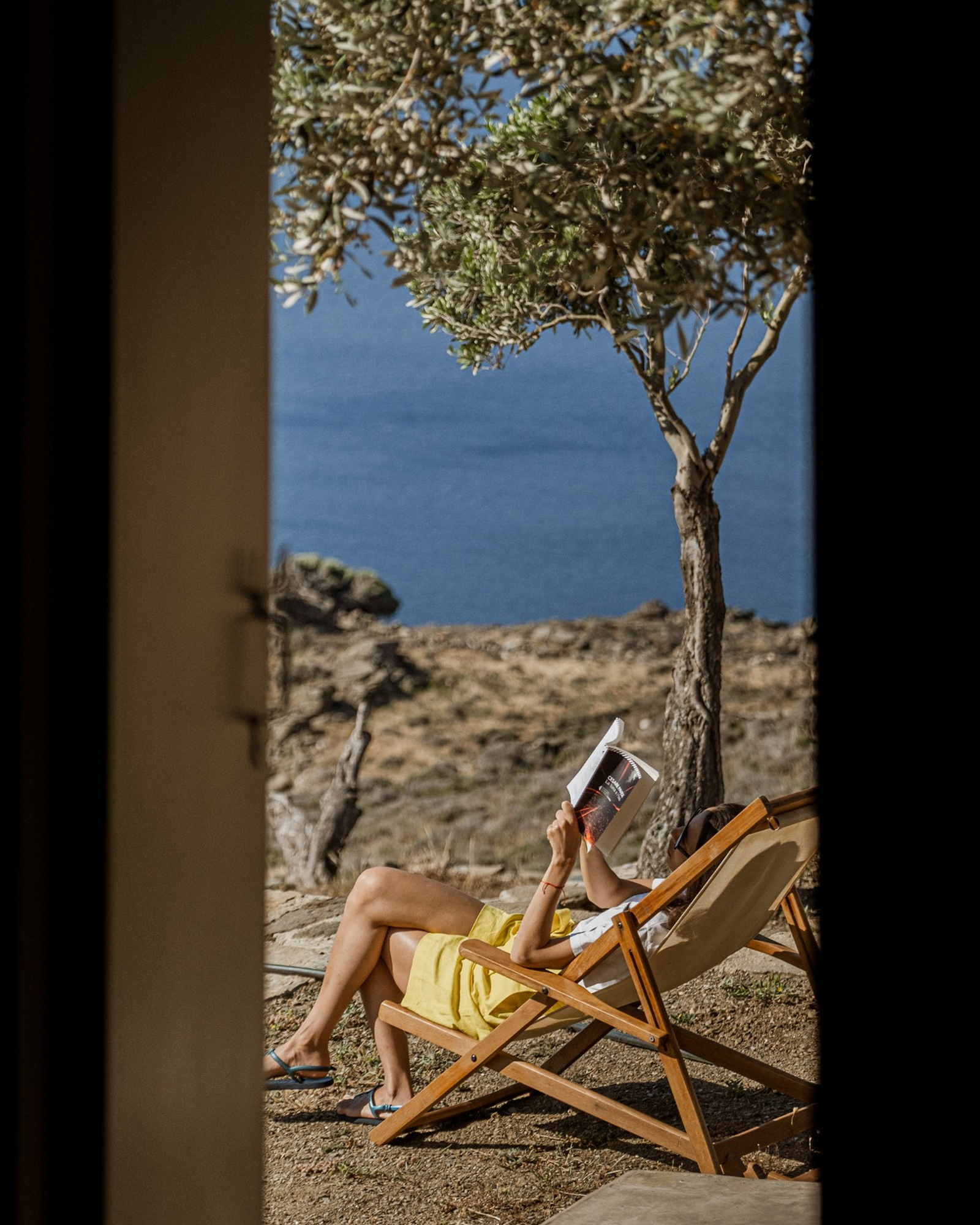
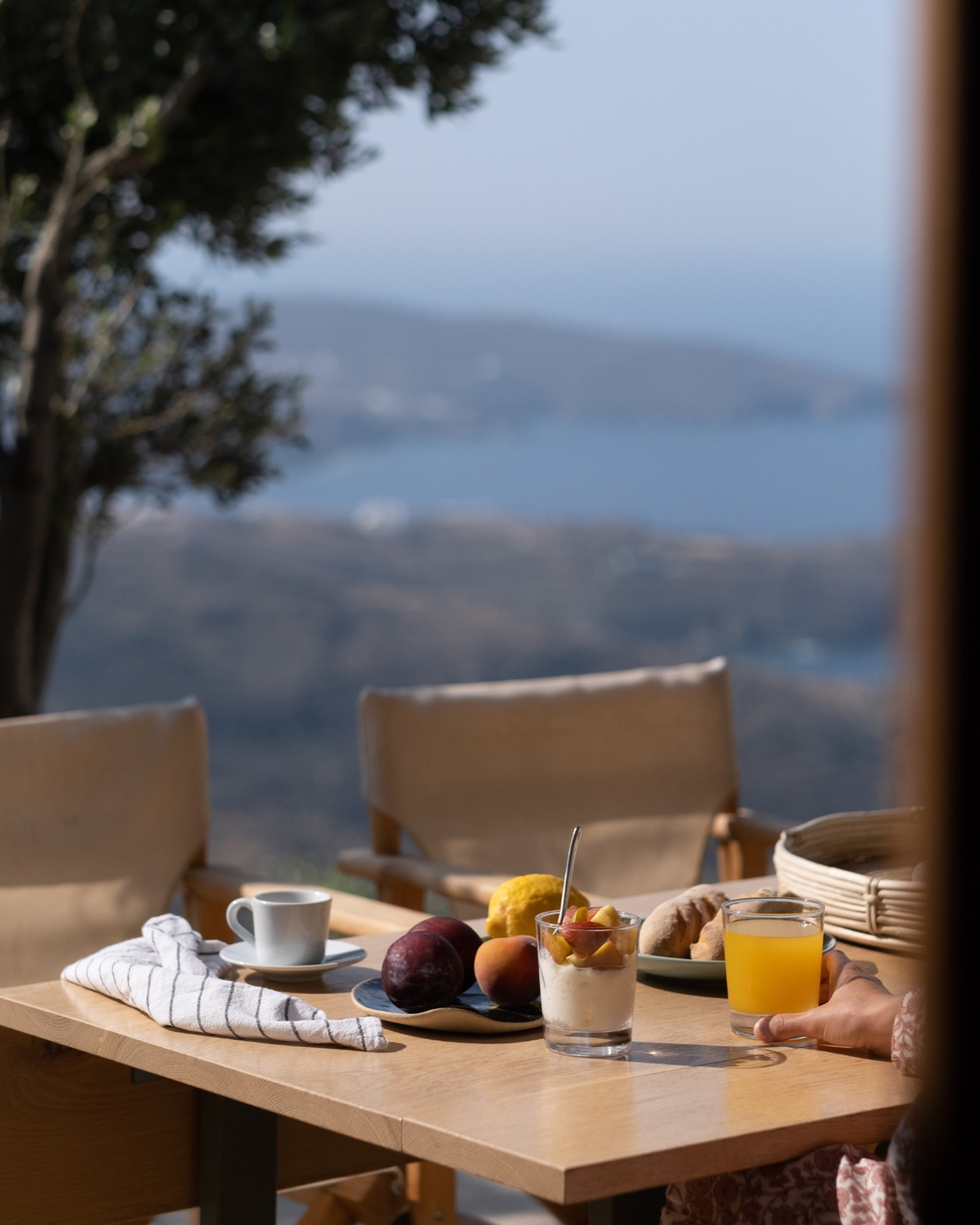
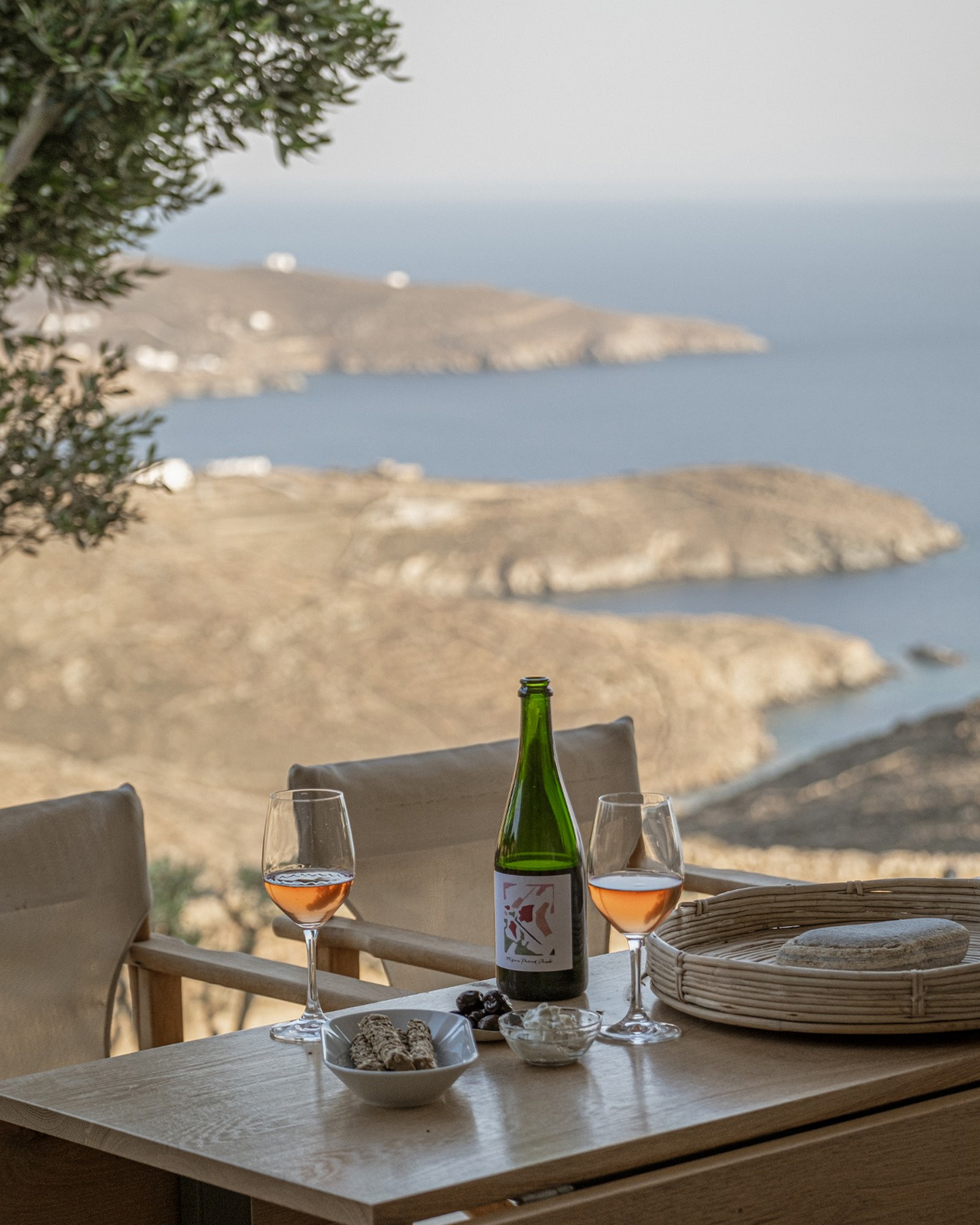
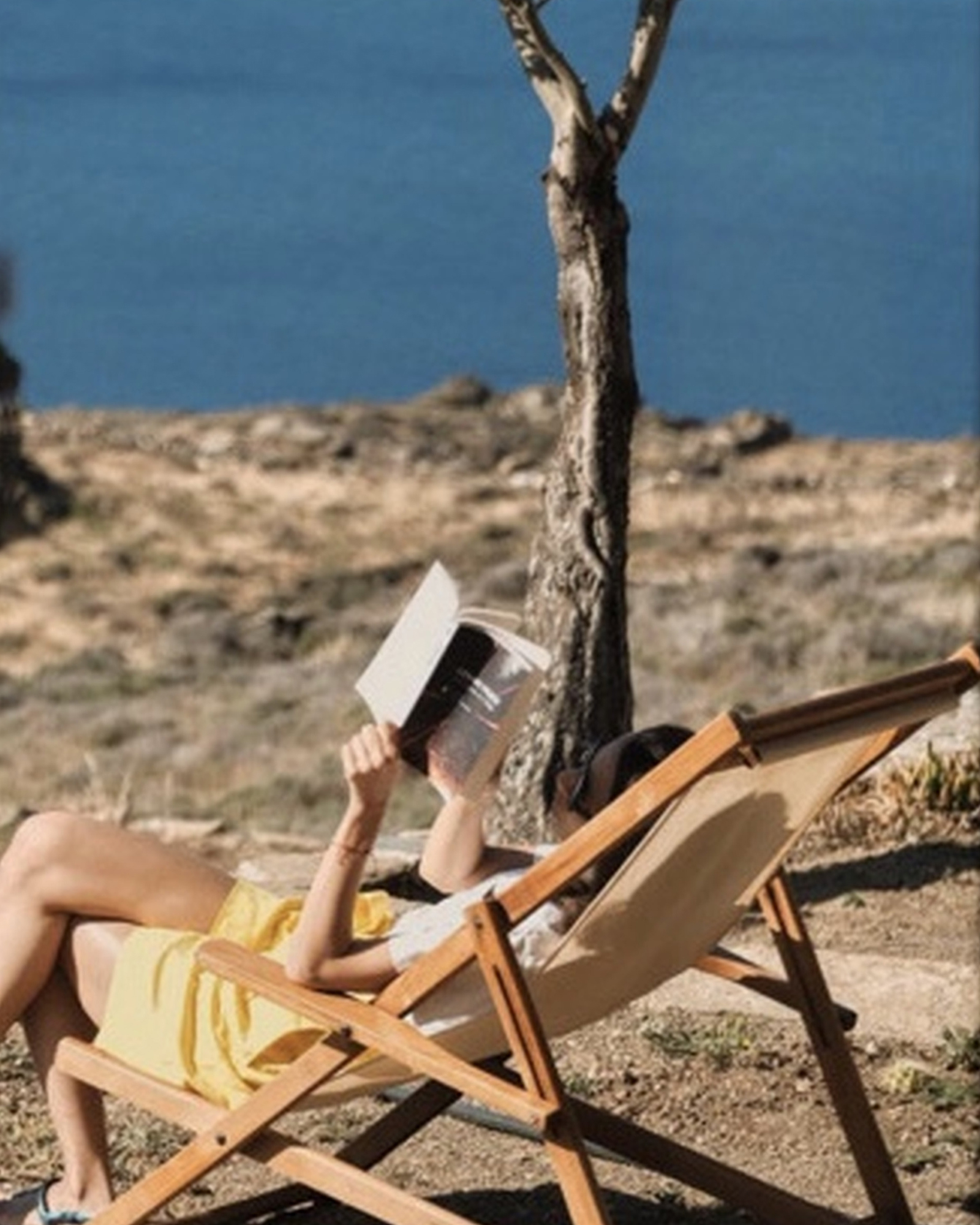
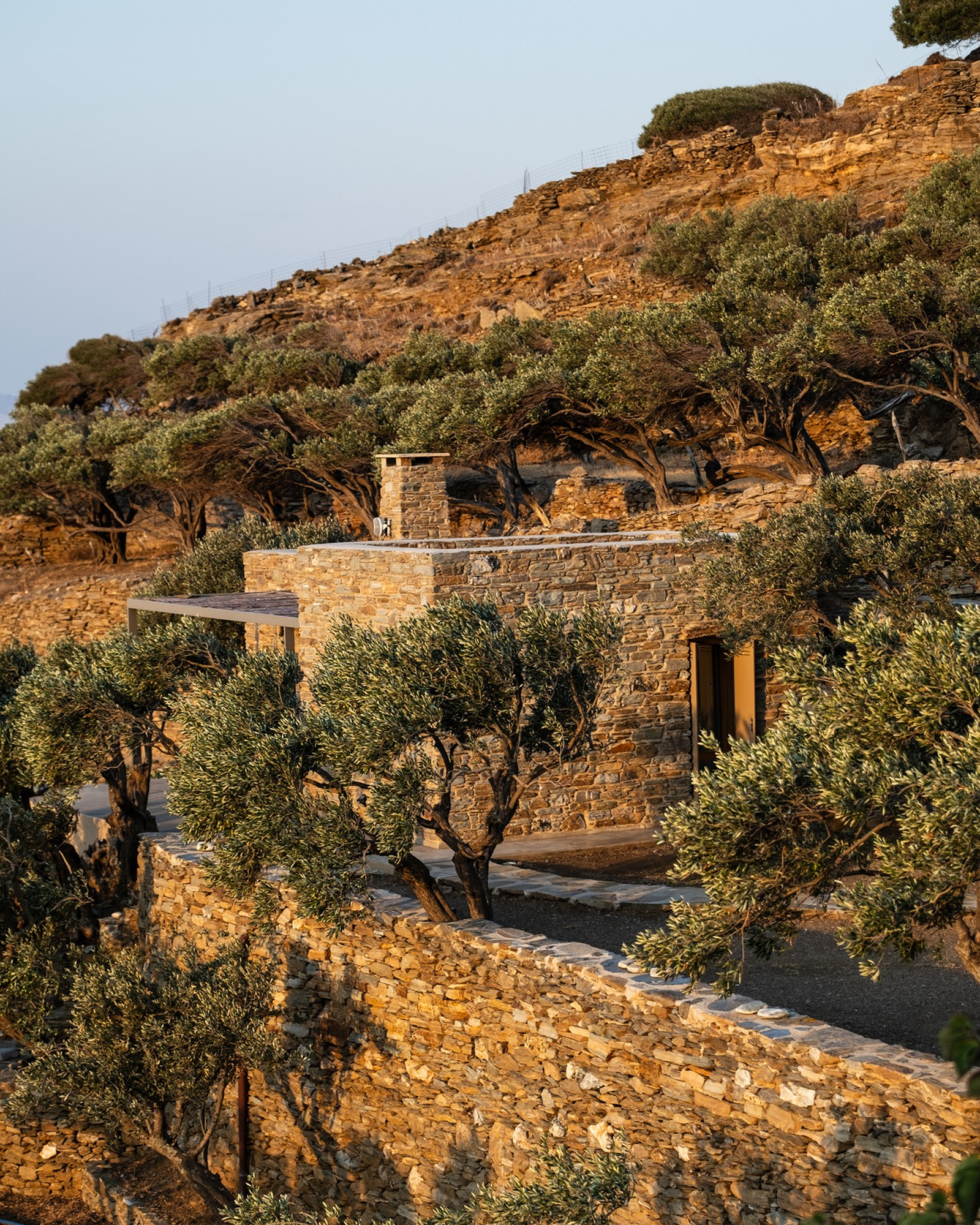
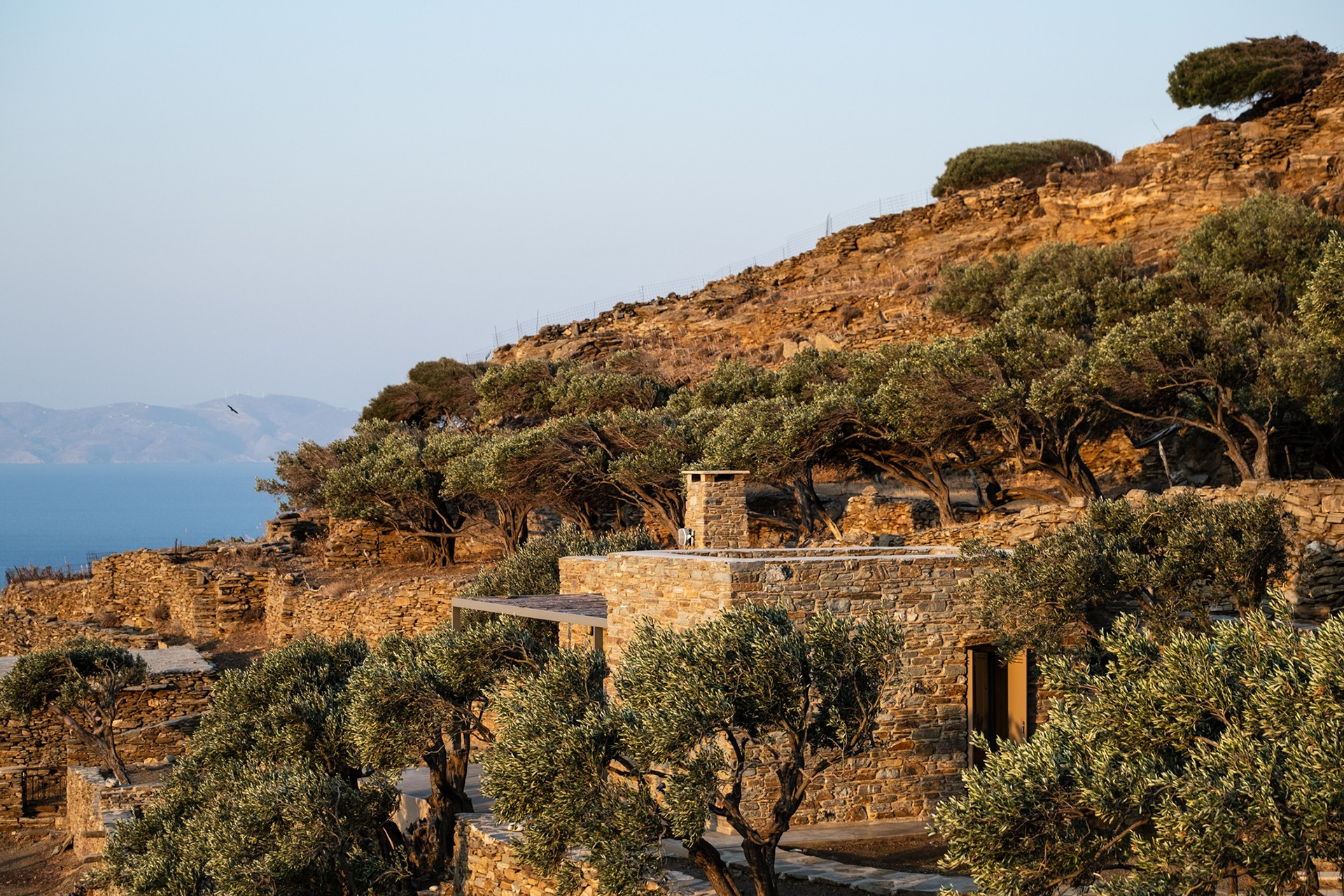
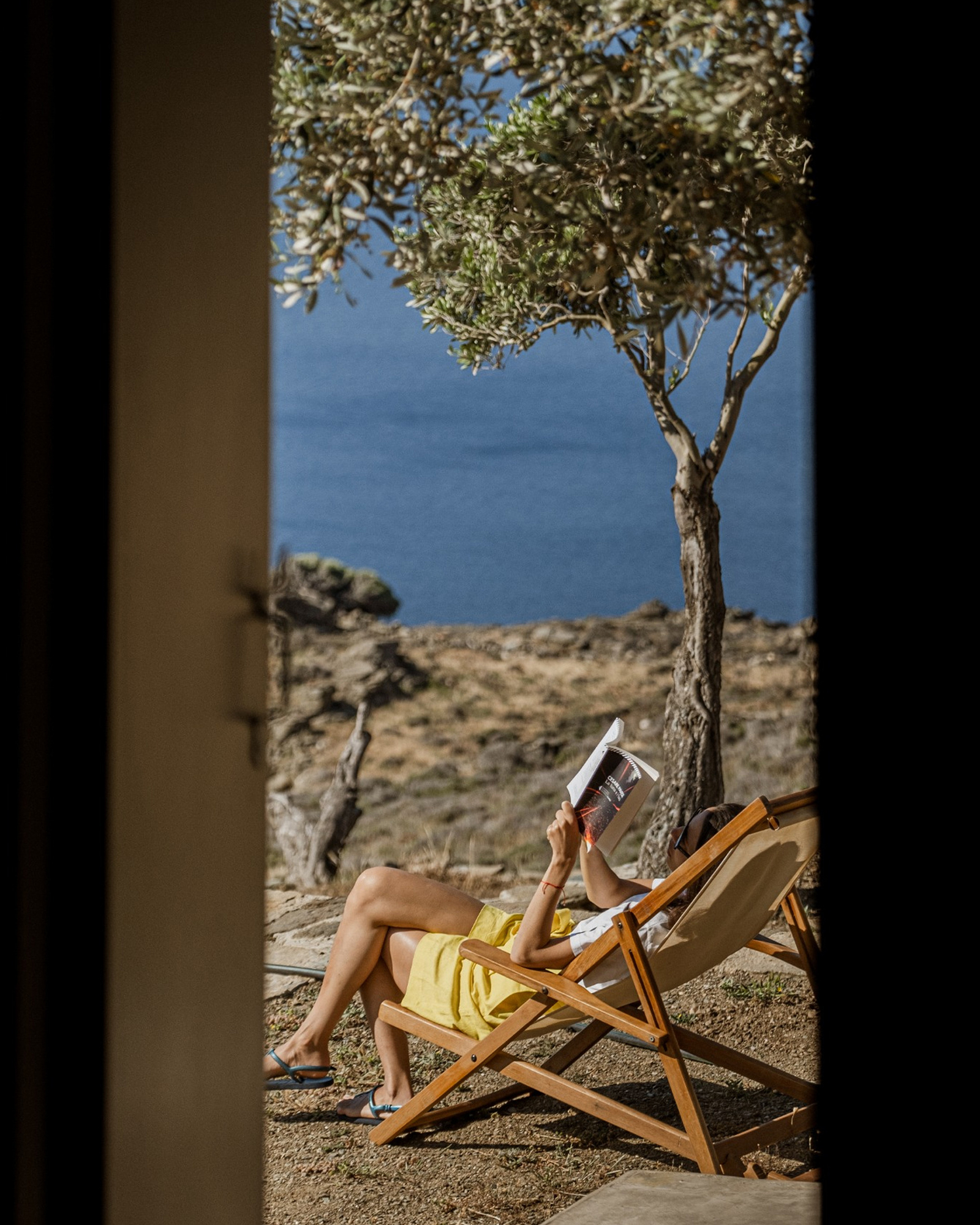
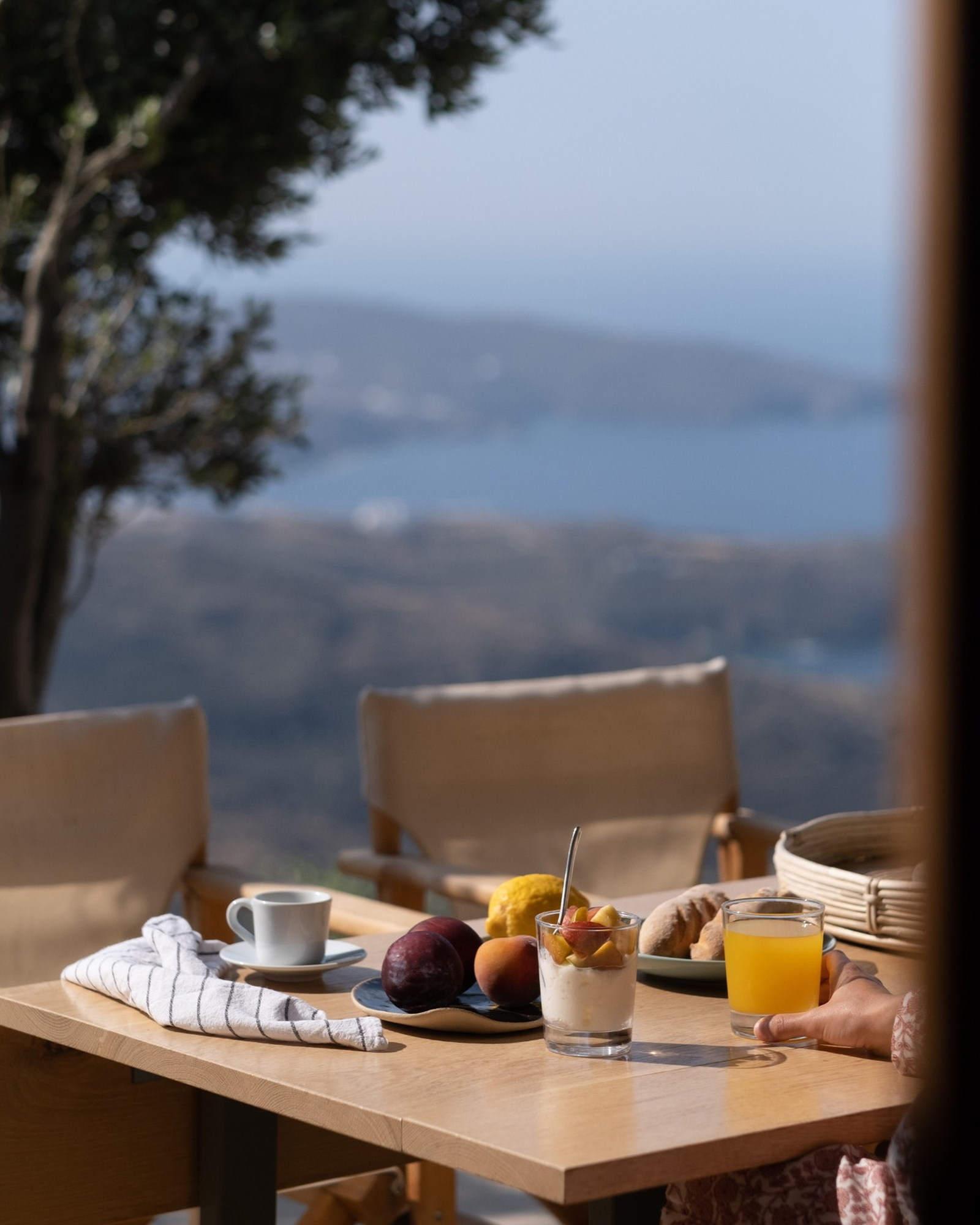
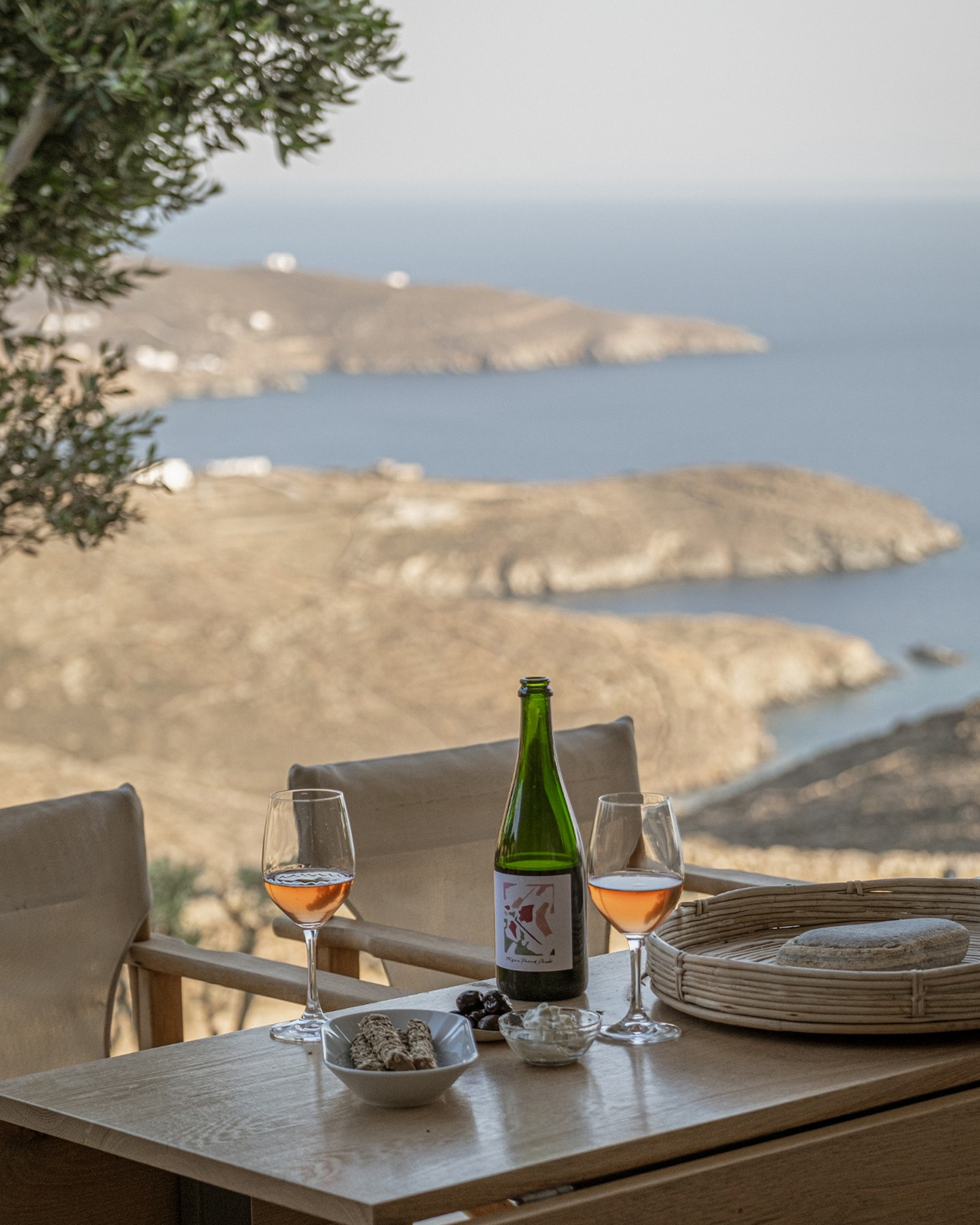
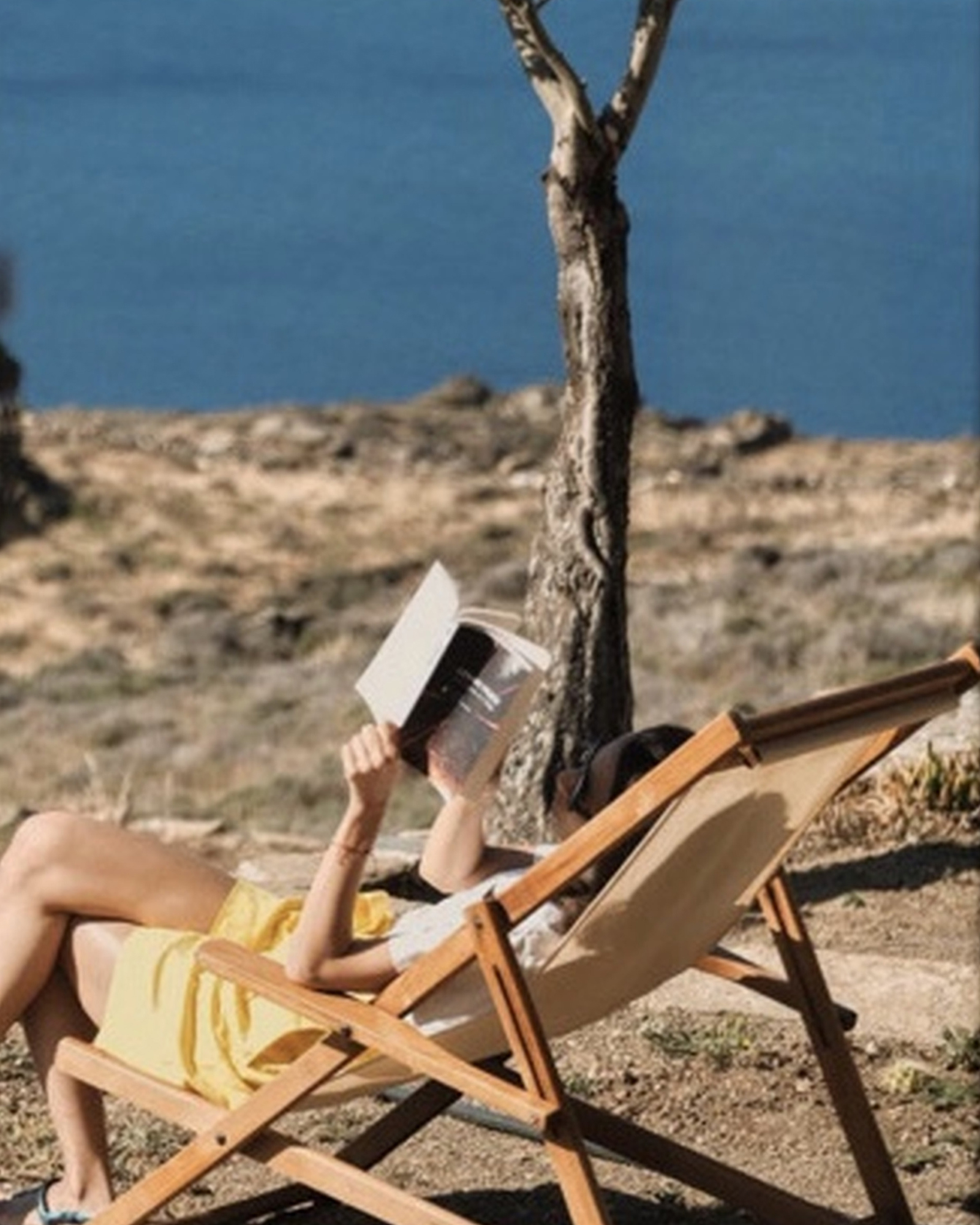
Avdos Olive House is a one-bedroom home on a working olive grove on the west side of Tinos, 18 minutes by car from the island’s port. There are no neighbors in sight, so you'll have the only Aegean to the west and the hillside’s rocks around you. Spend your days eating outside and at the rocky swimming spot, then sleeping to nothing louder than the wind and the sound of goat bells.
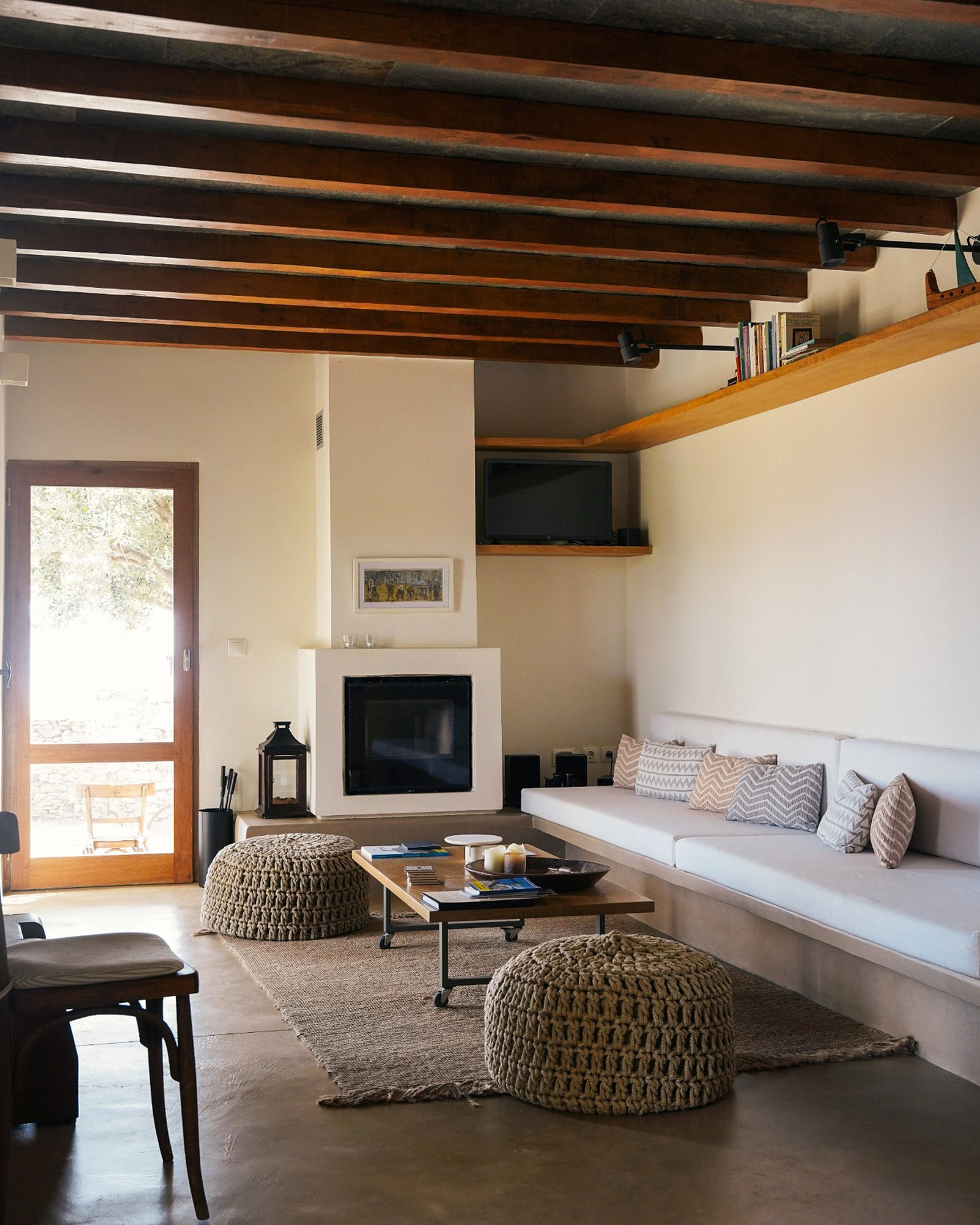
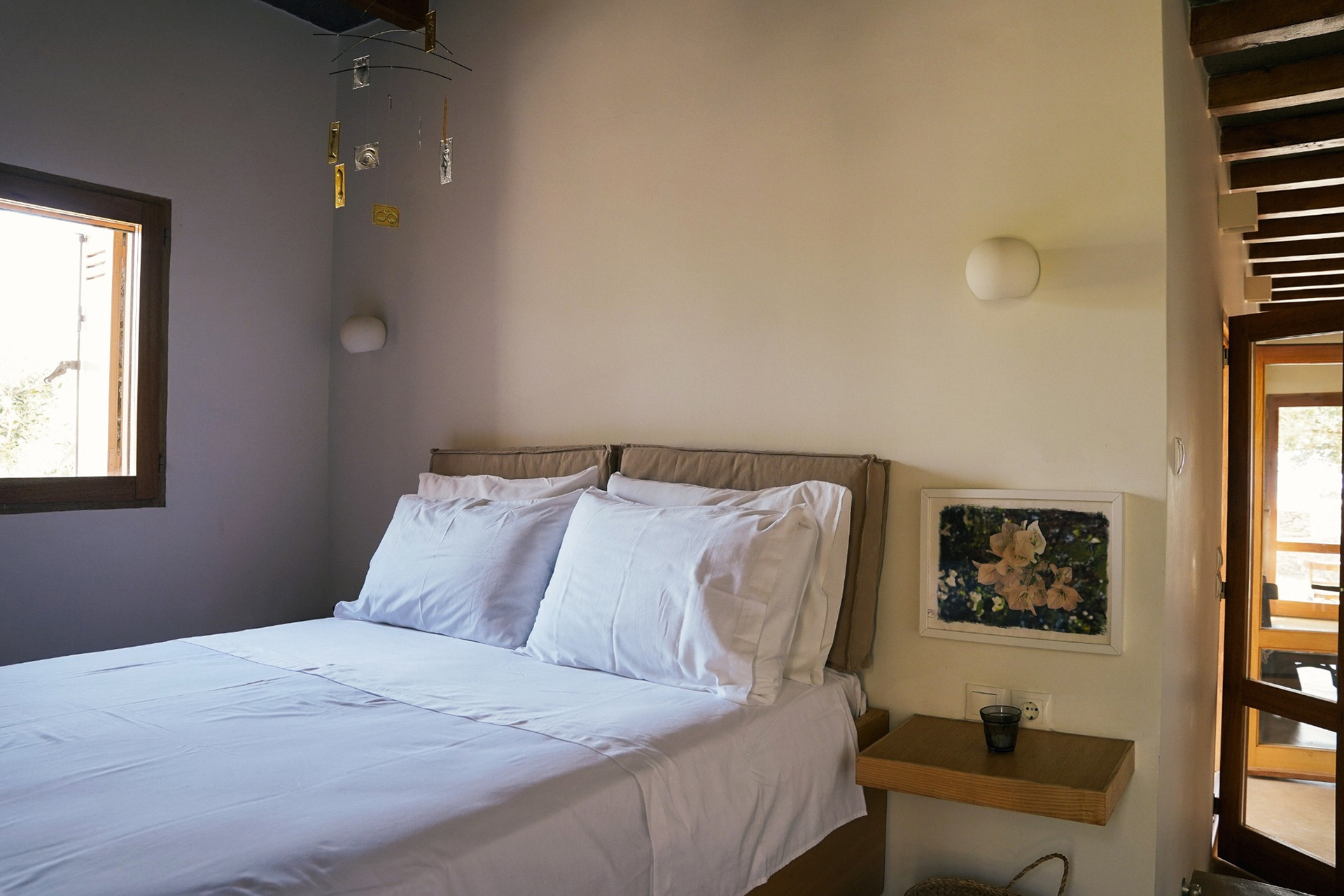
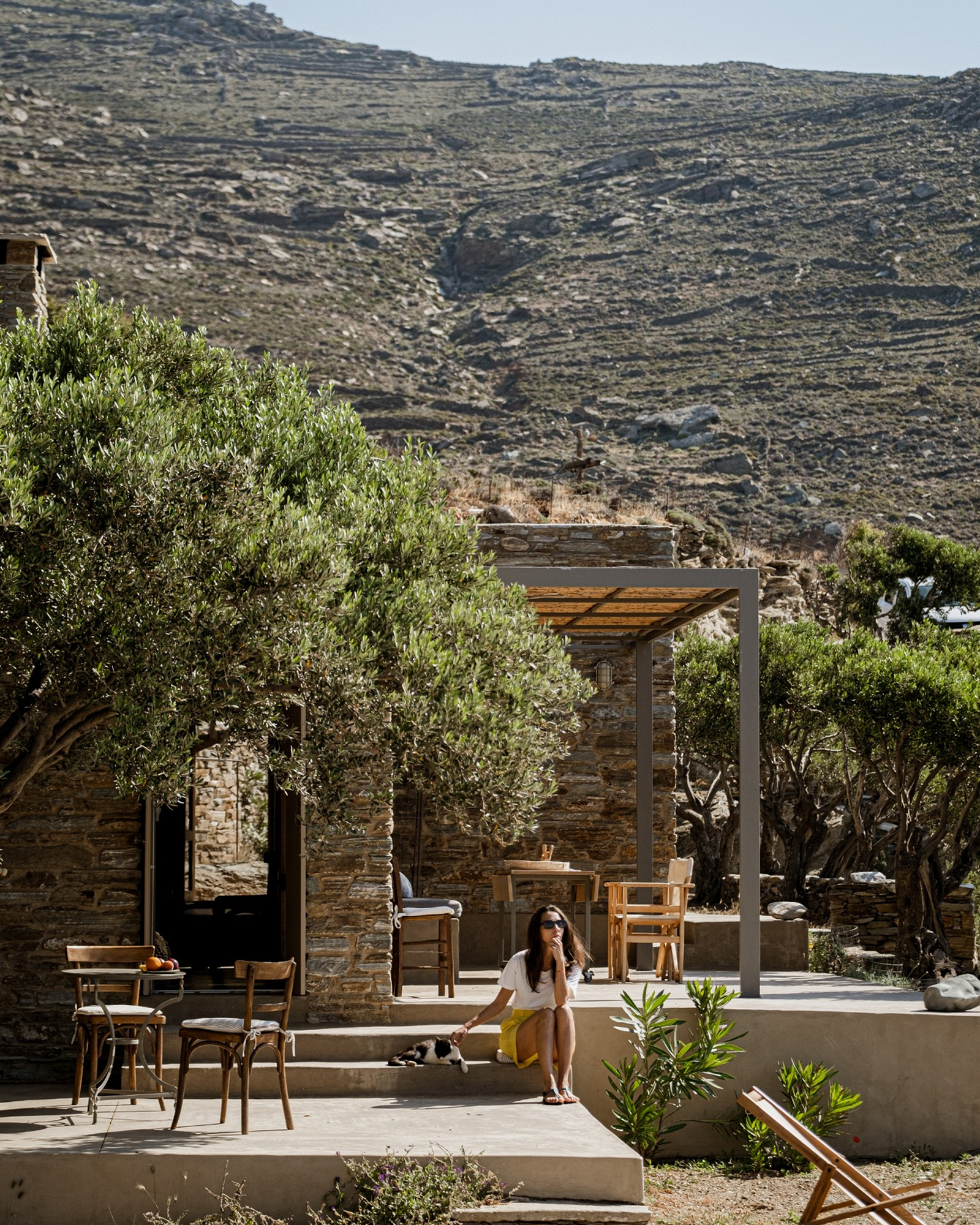
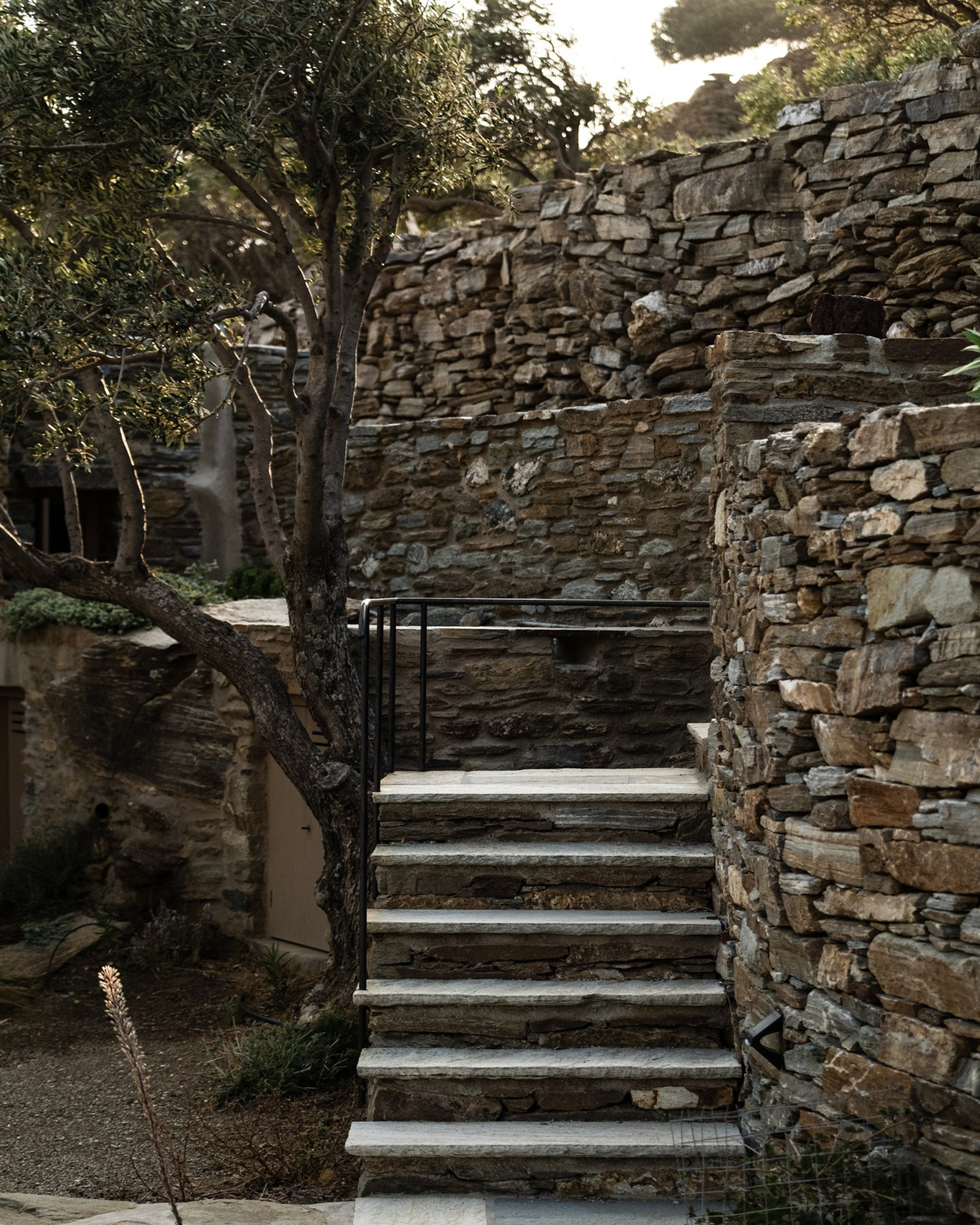
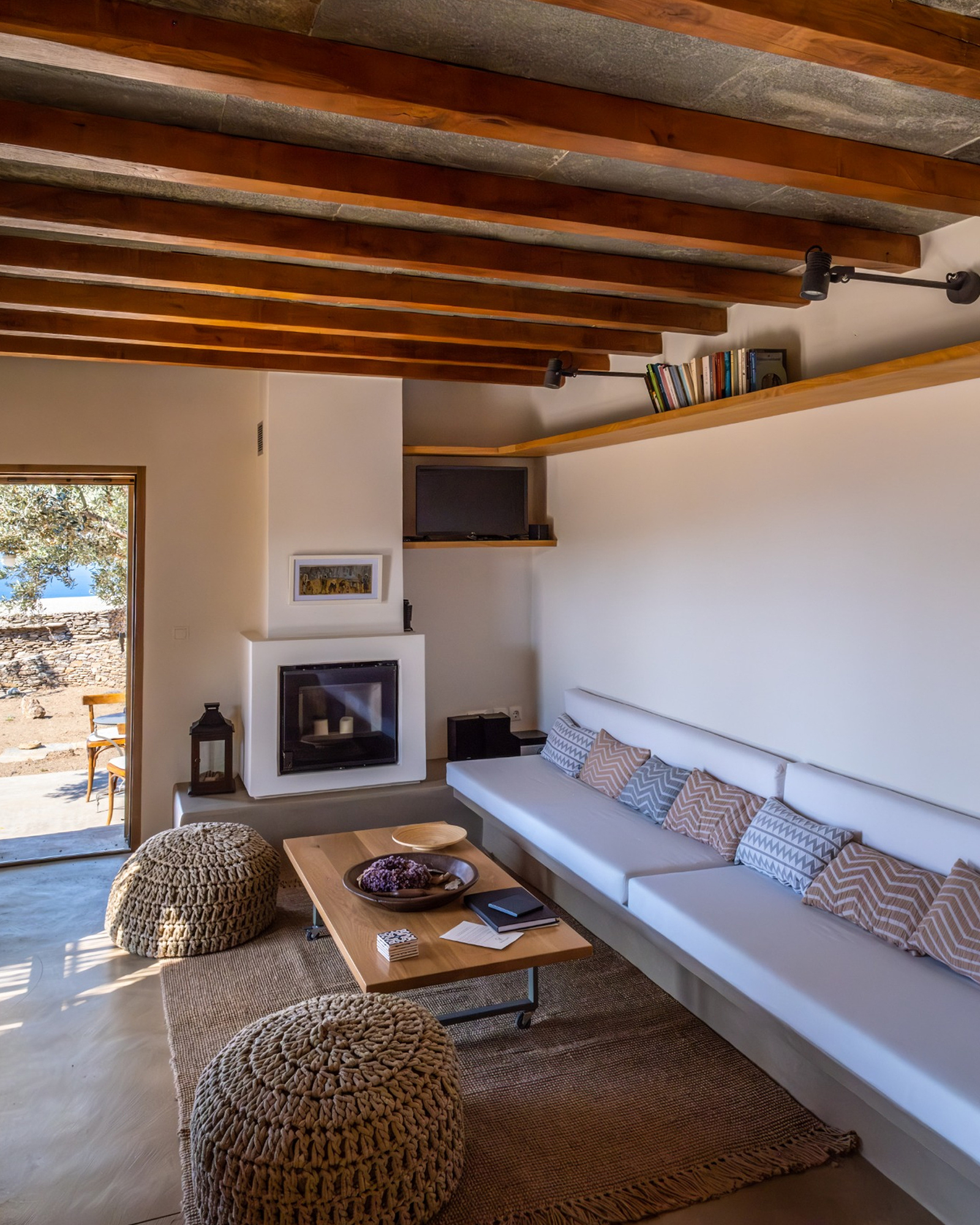
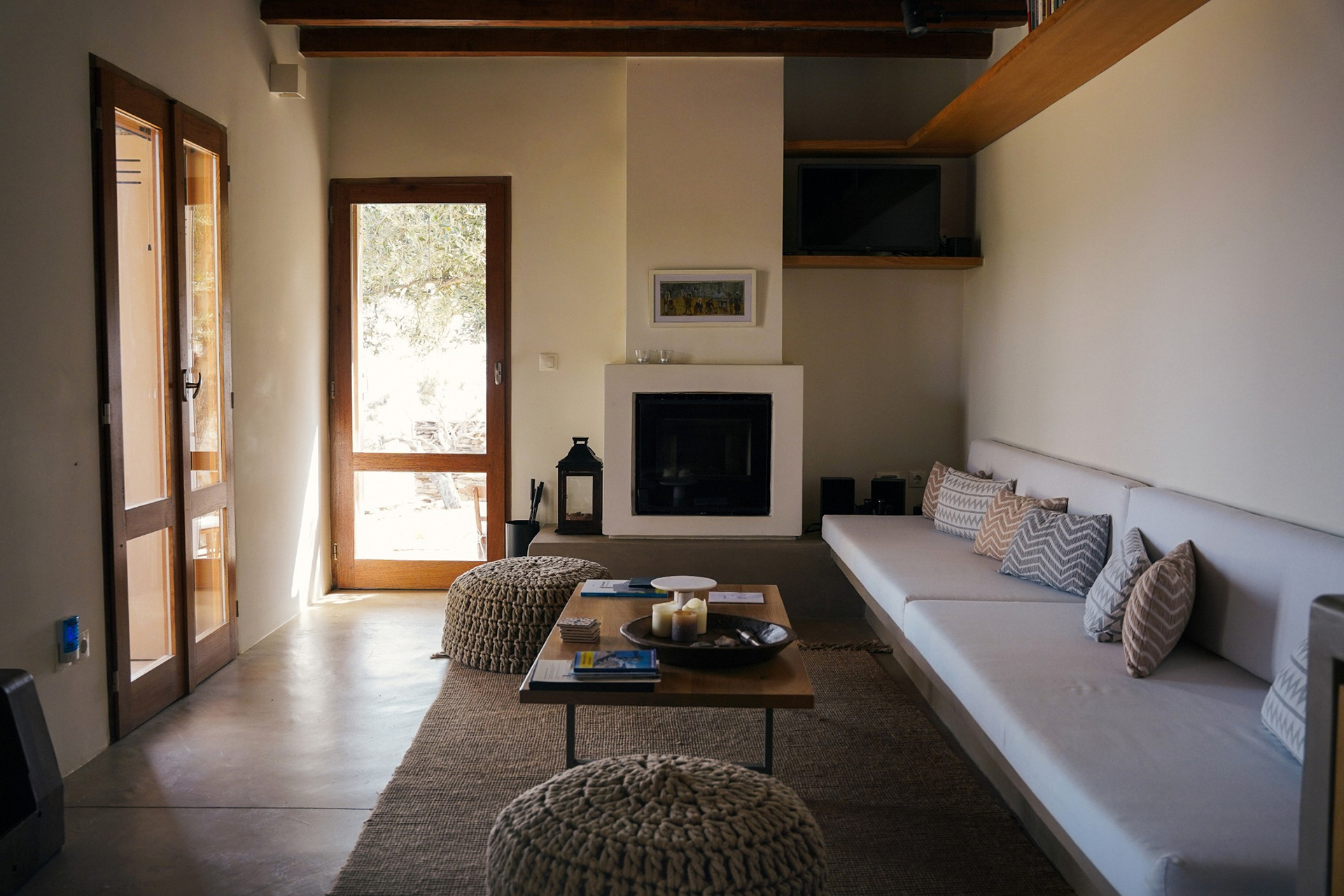
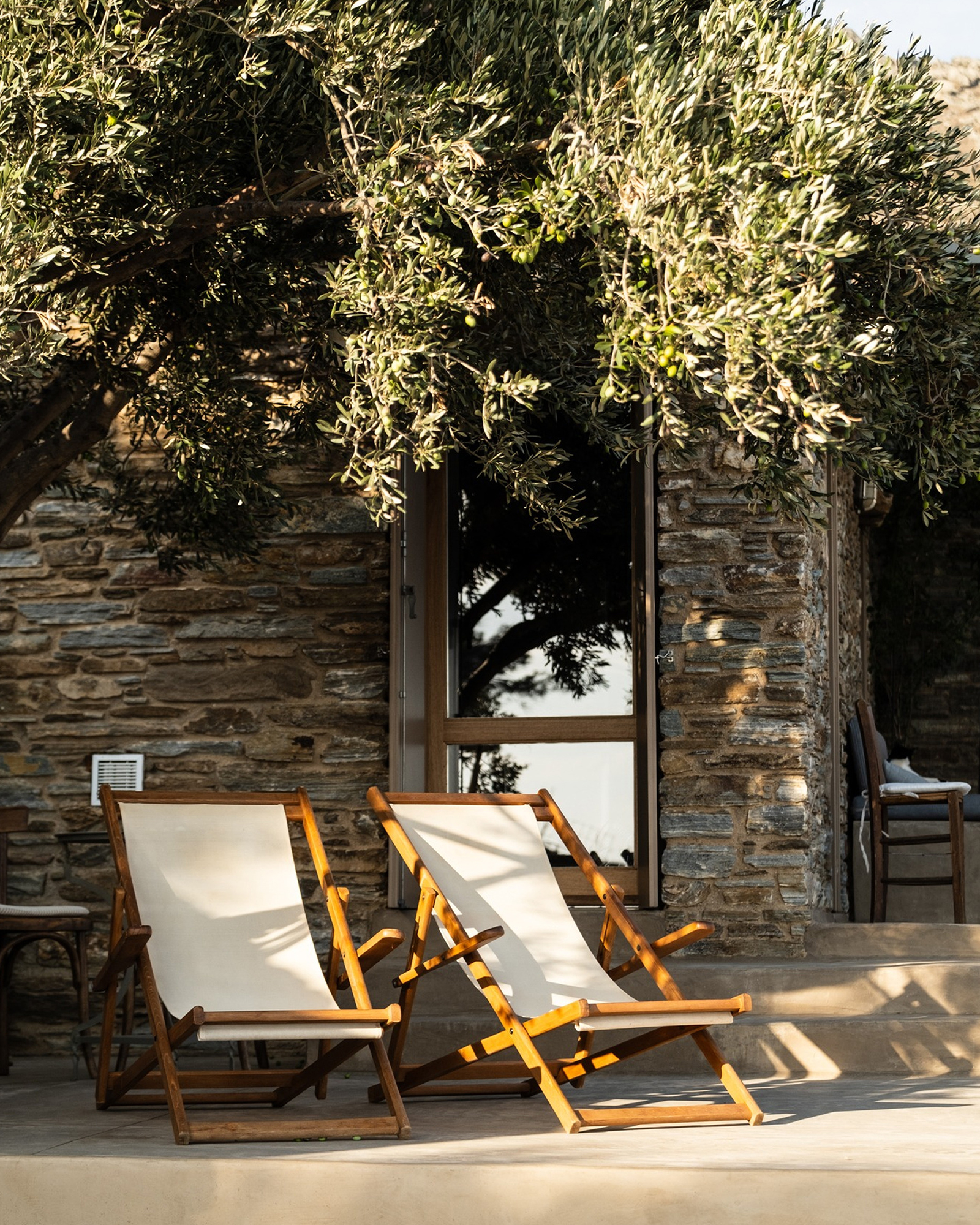
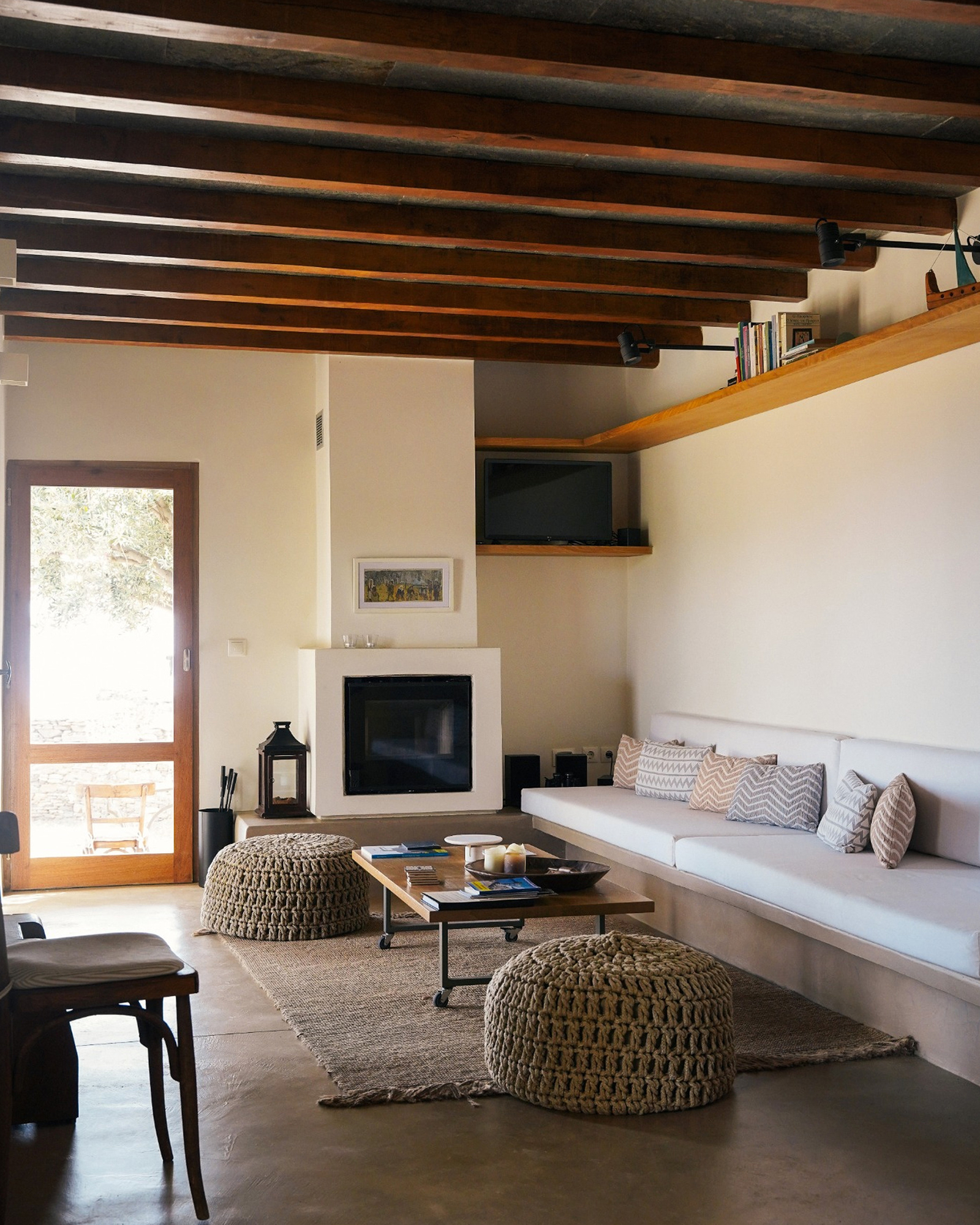
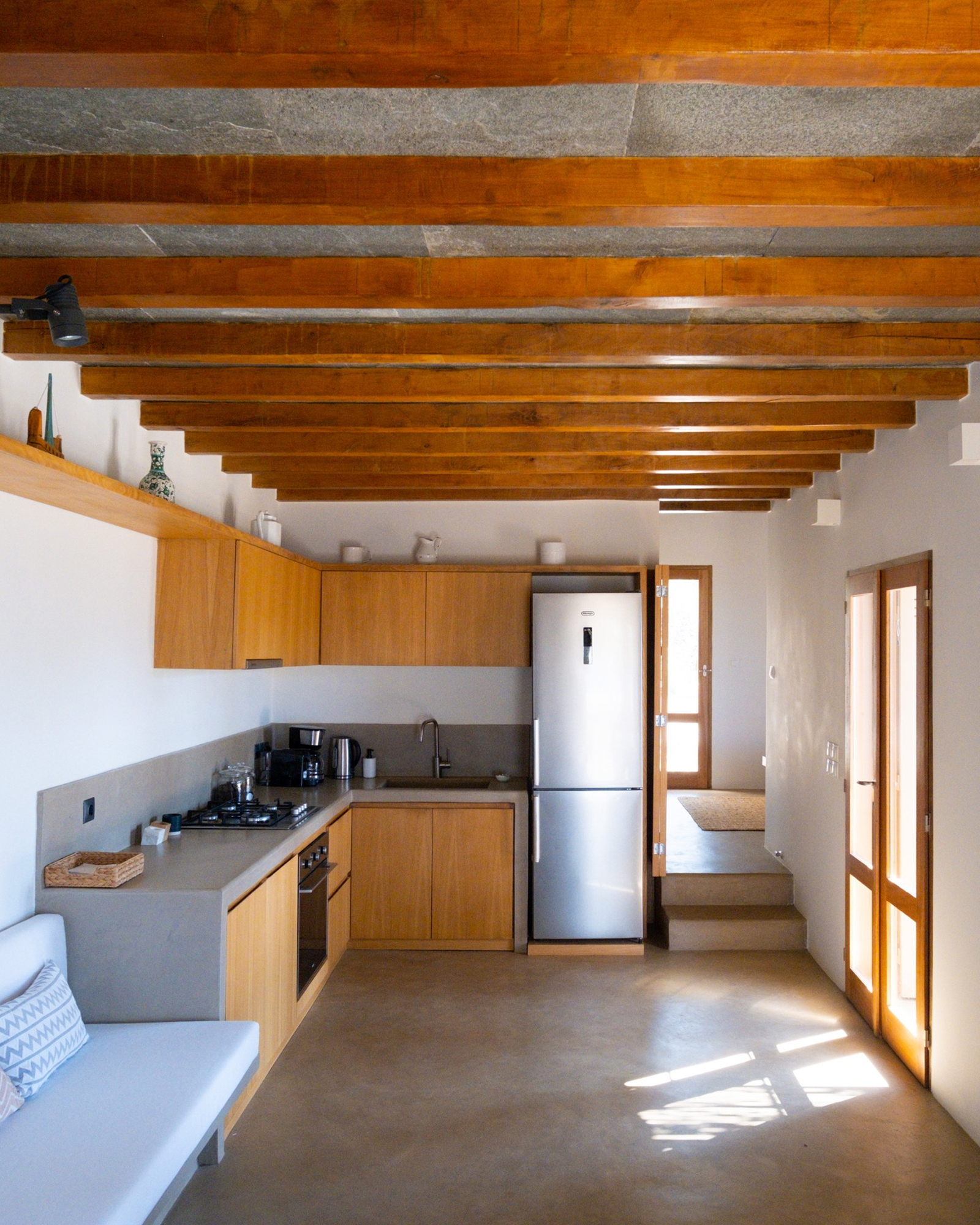
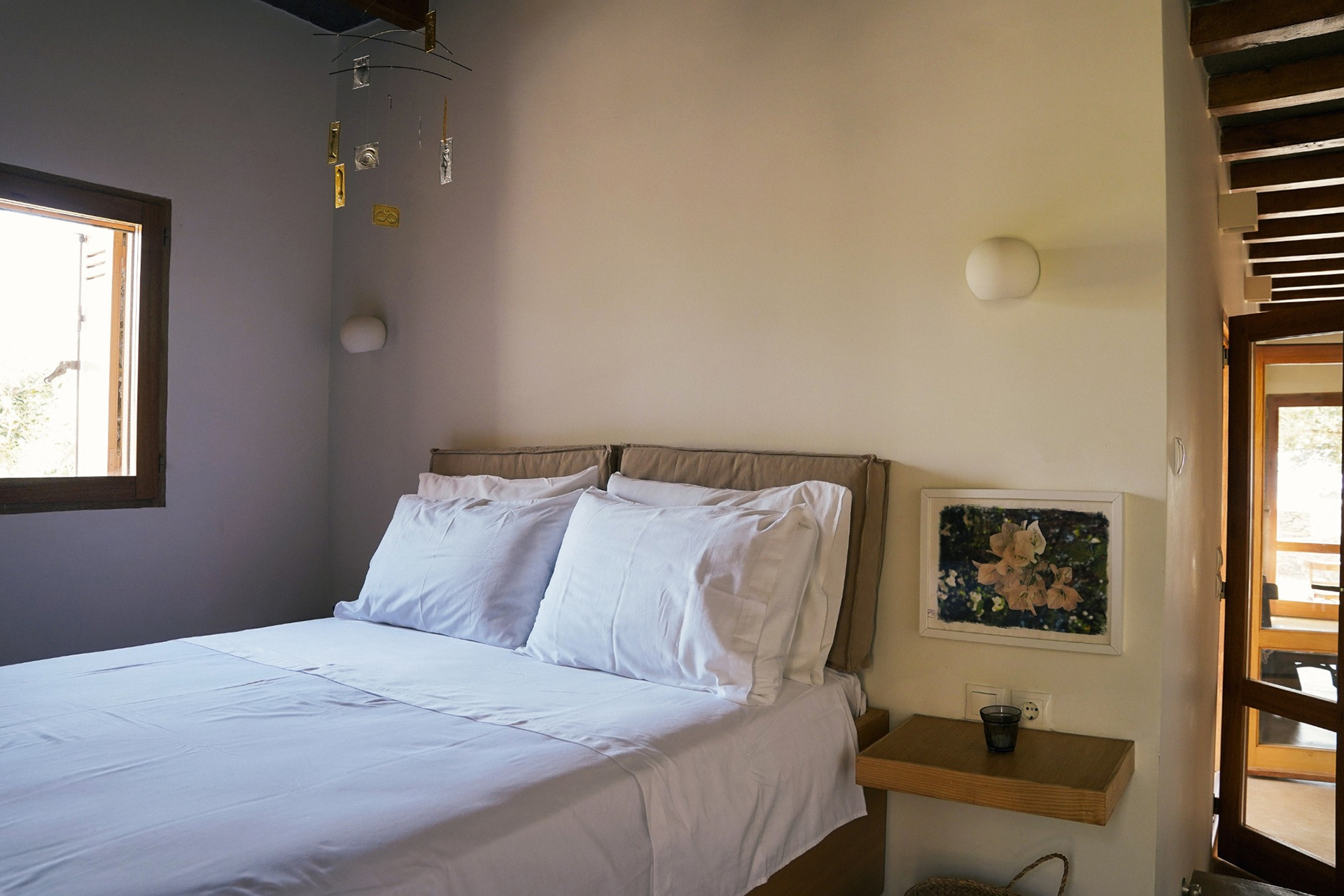
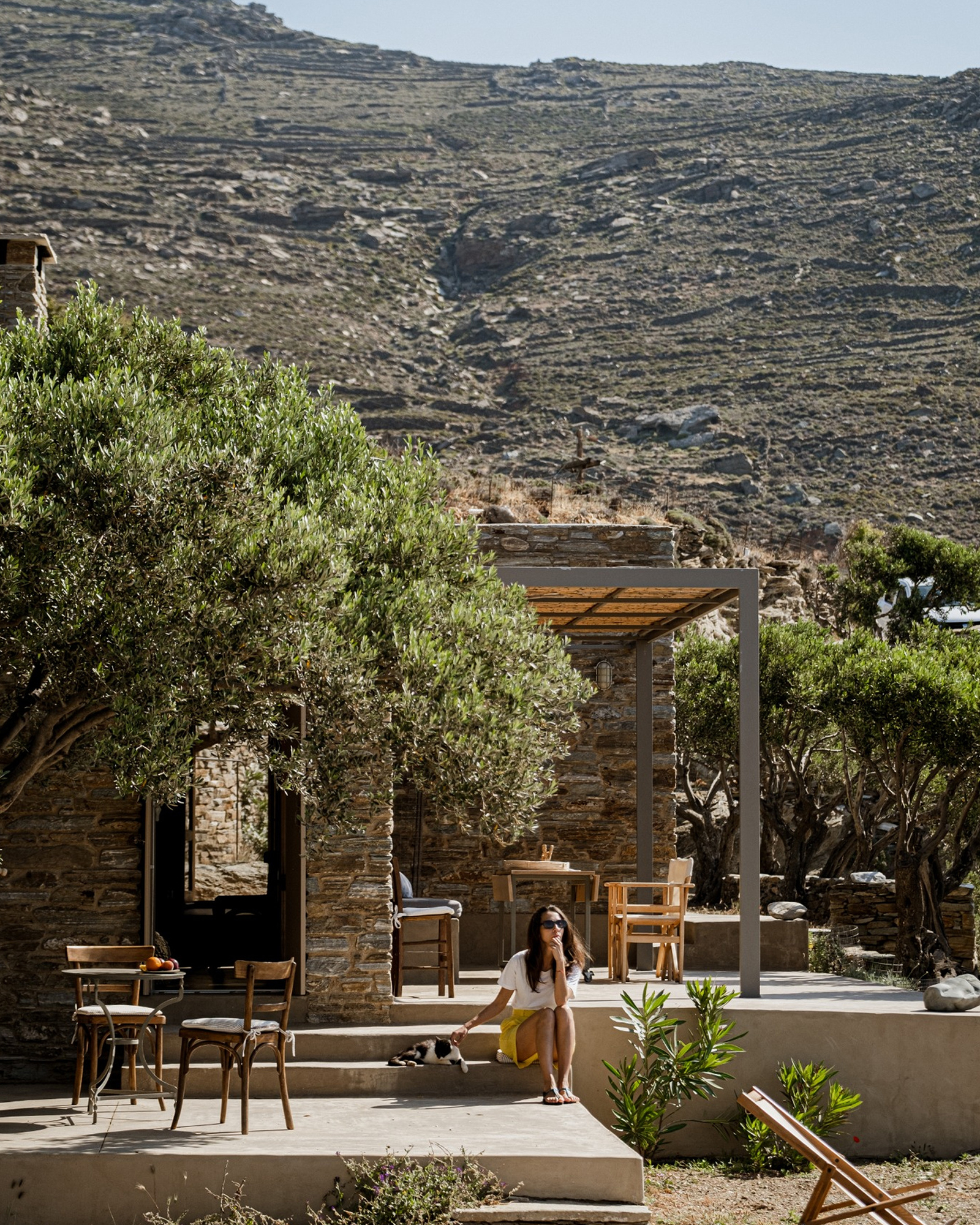
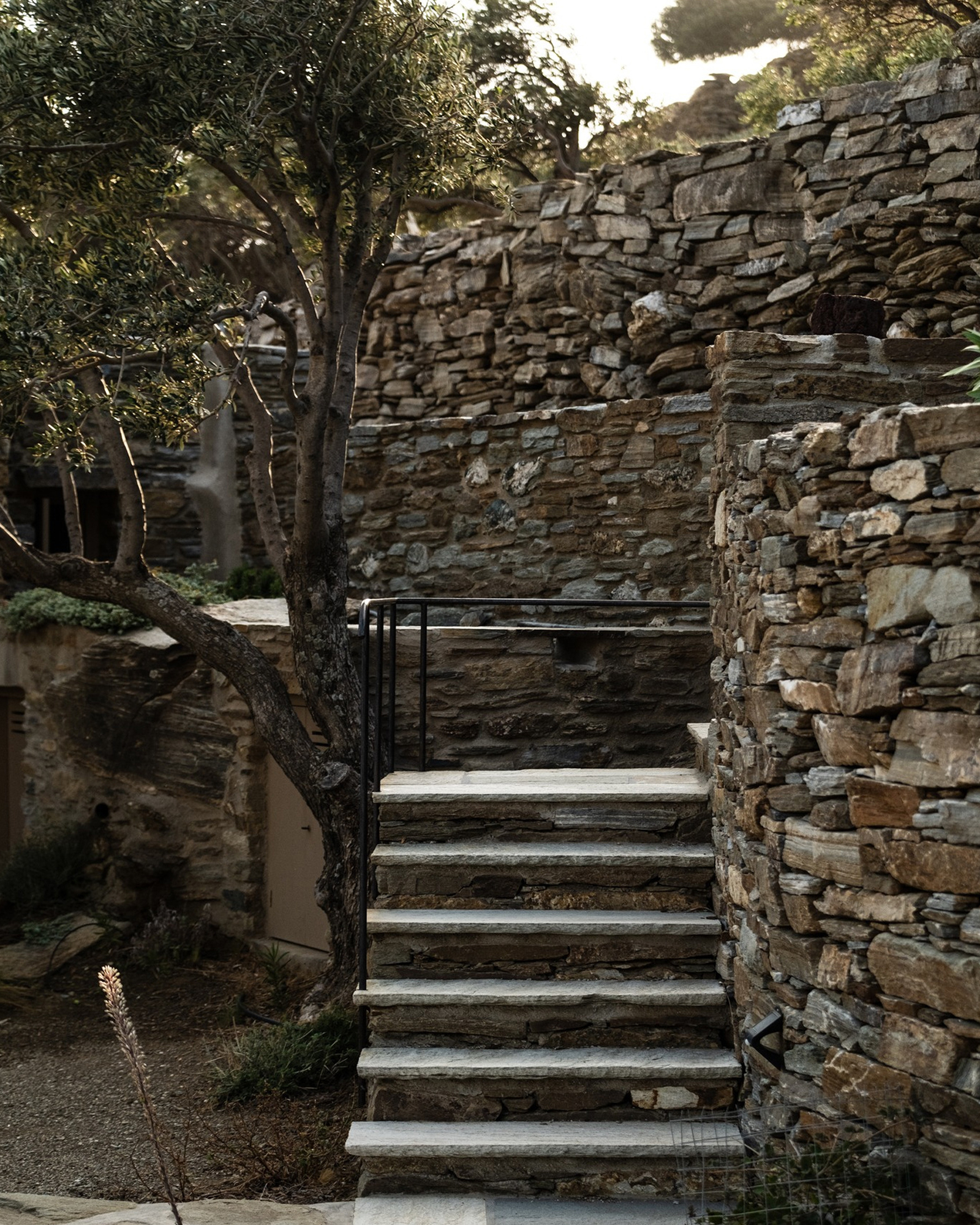
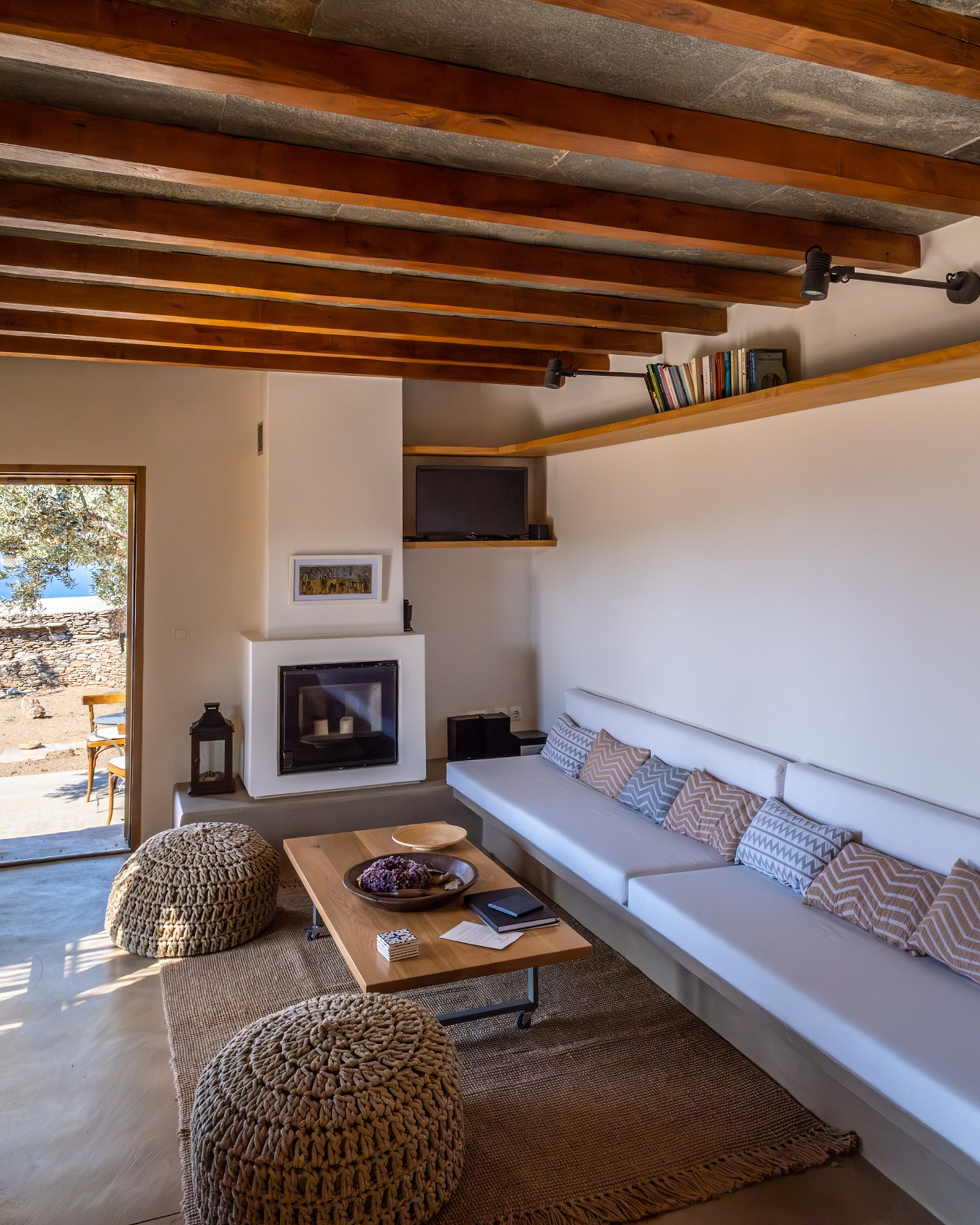
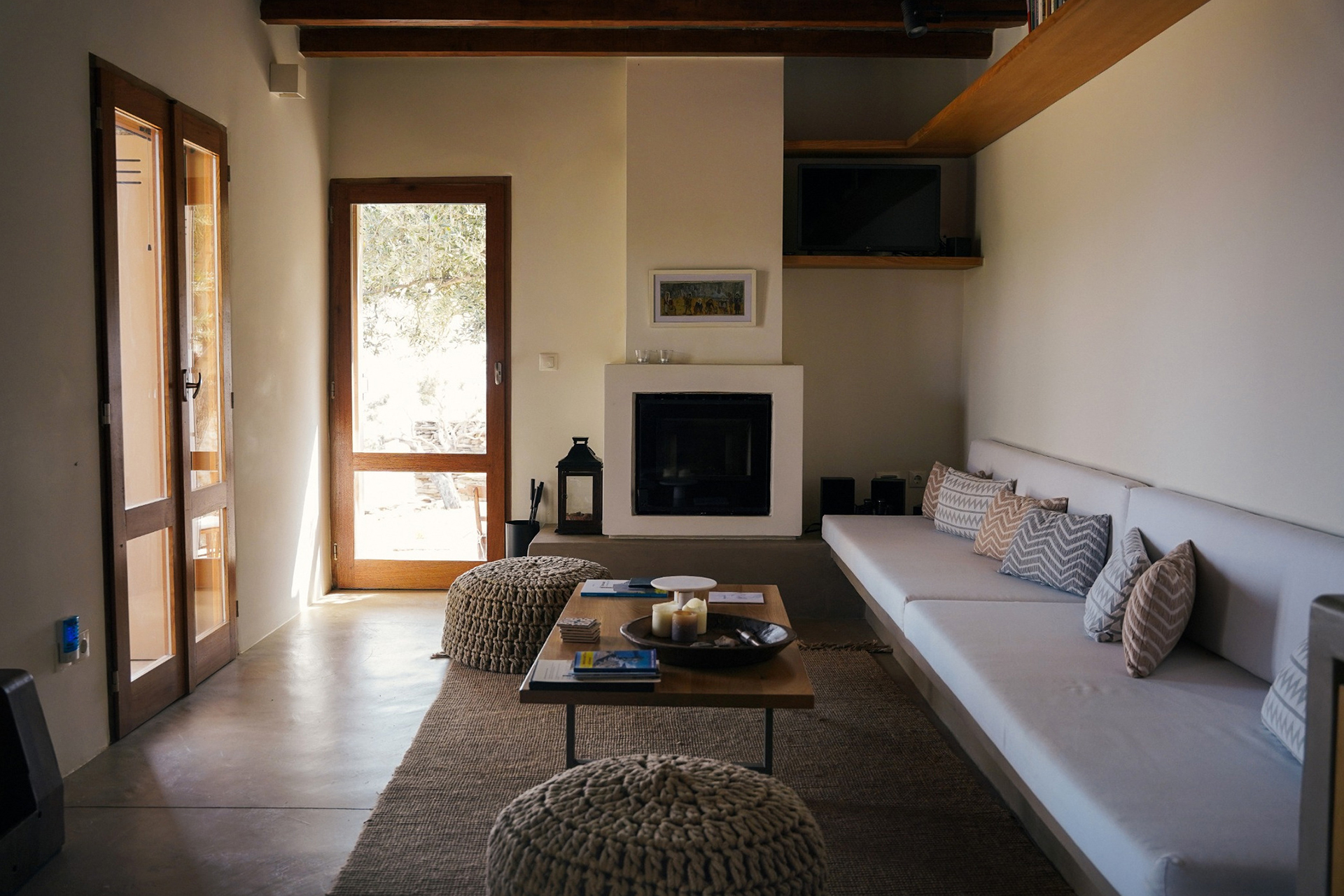
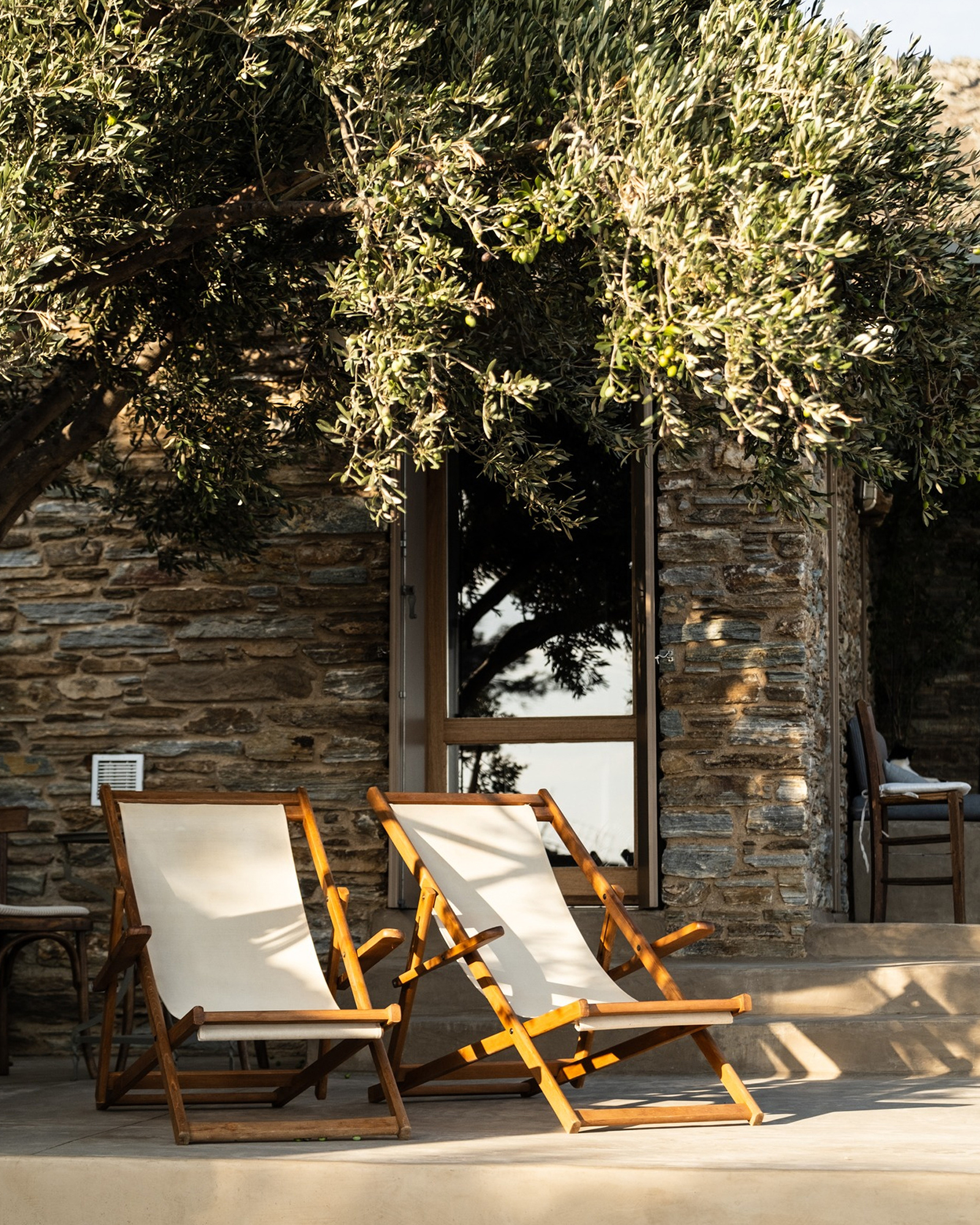
The architect, Maria Vidali, planned the approach carefully. Steps lead from the rough grove into a sheltered courtyard, through the long kitchen and living room, and up to a bedroom she kept darker and more private than the rest. In the courtyard, a metal pergola with a bamboo cover gives shade for long afternoons outside, and in winter, the fireplace at the edge of the seating area warms the whole house.
An old track leaves from near the house and drops down to Aspres Plakes, a rocky swimming spot. It’s a real path rather than a promenade, uneven, overgrown in places and steep in others. In proper walking shoes, it’s one of the best things here. If you want to wander farther afield, the easier beaches are 10 minutes away by car.
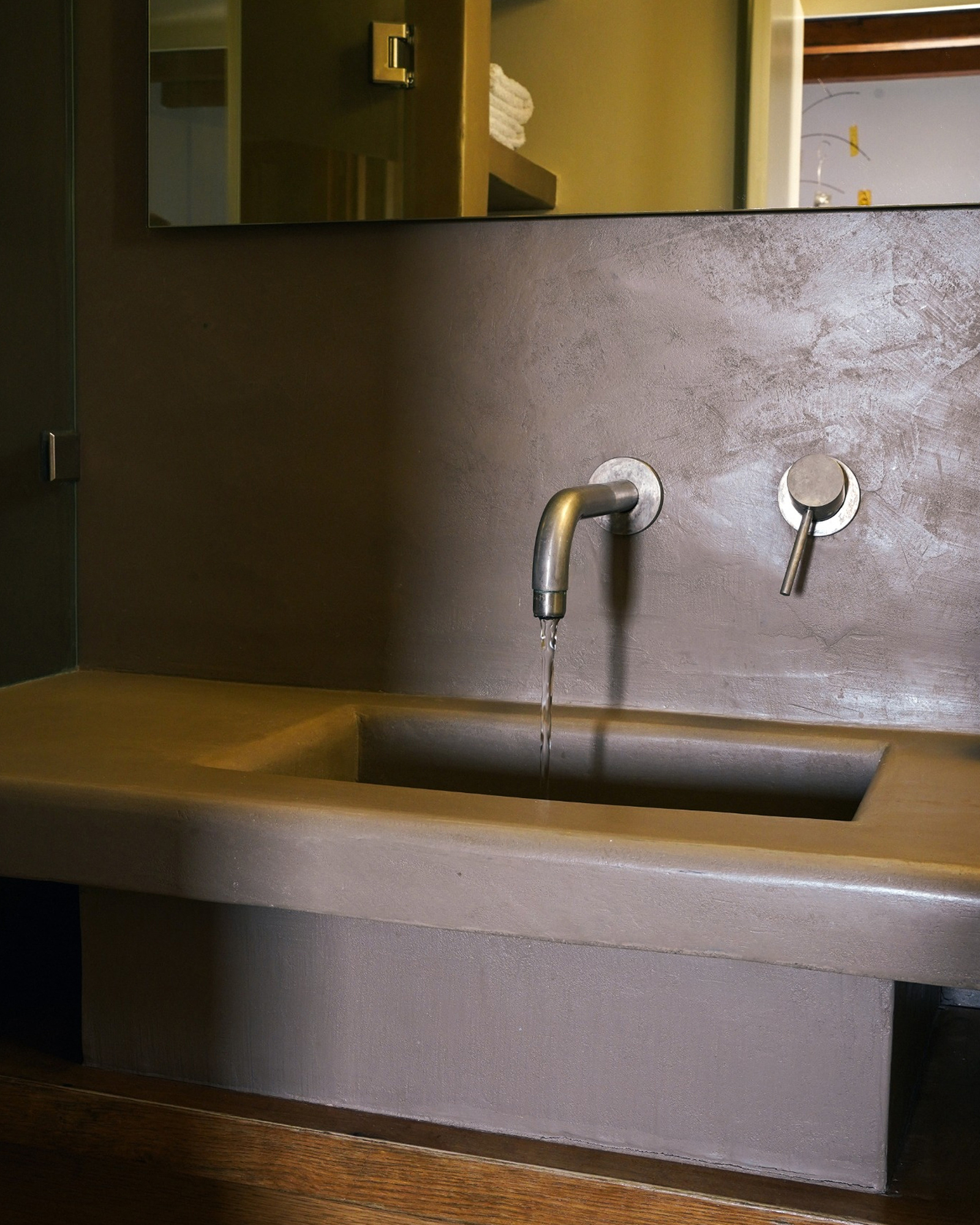
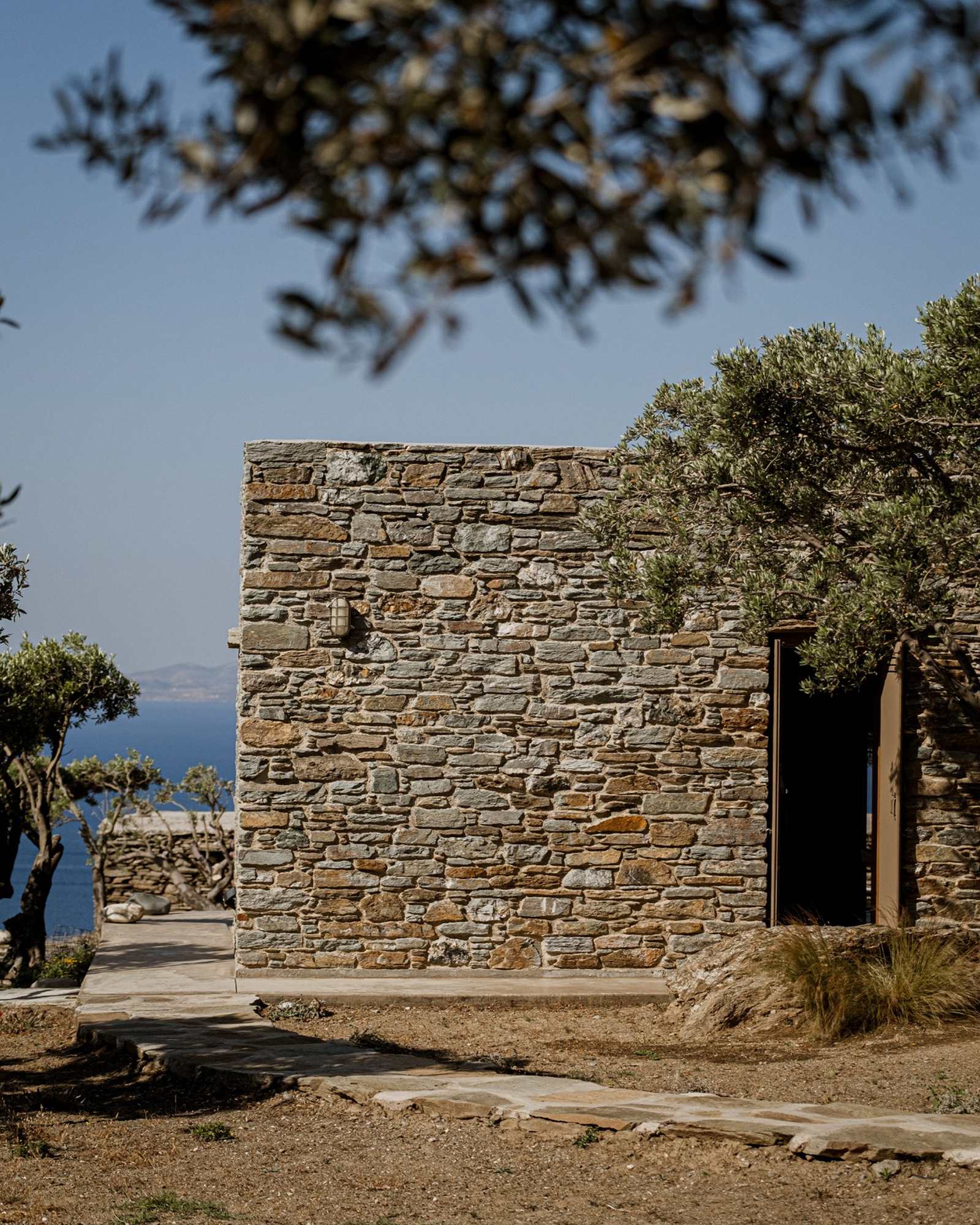
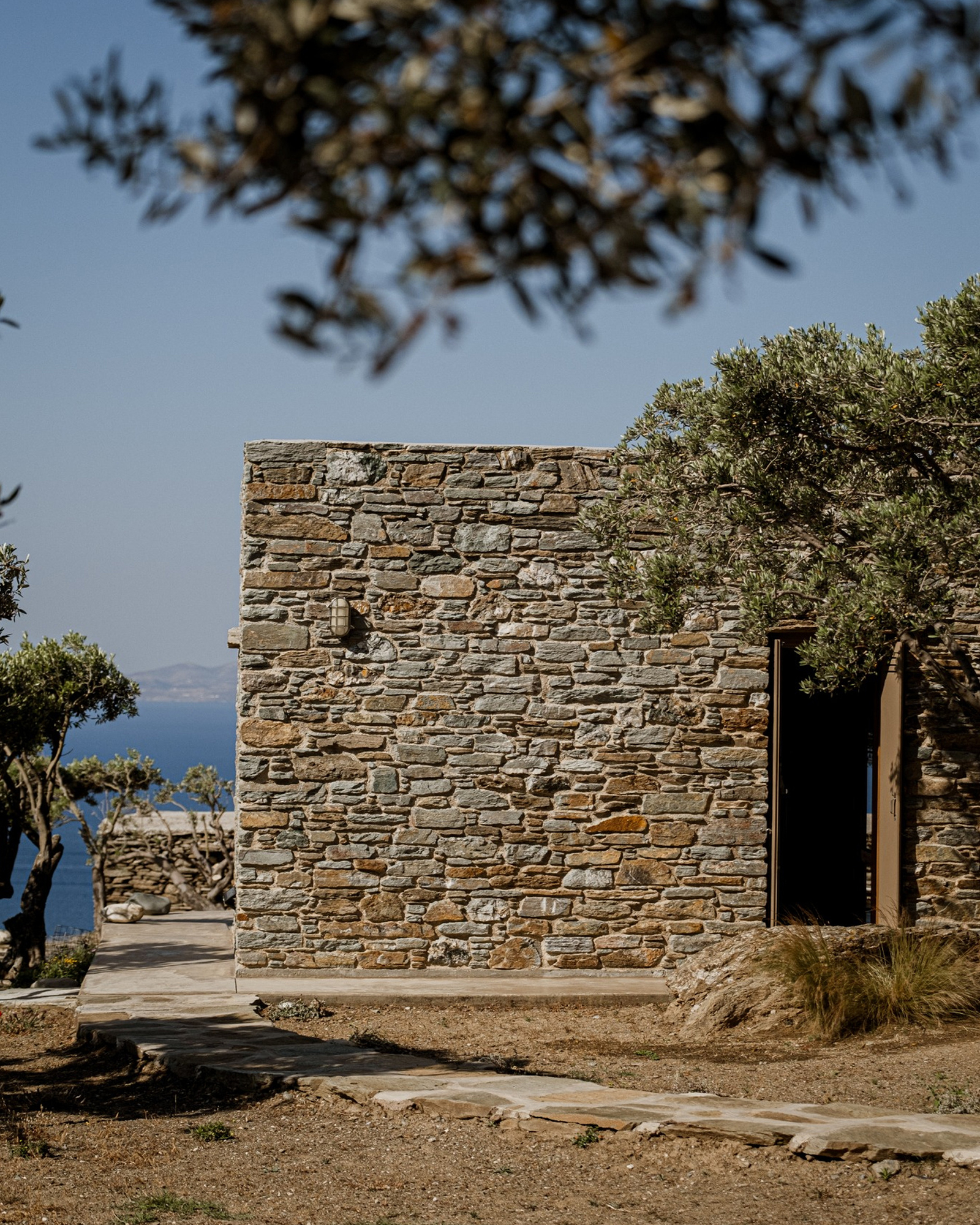
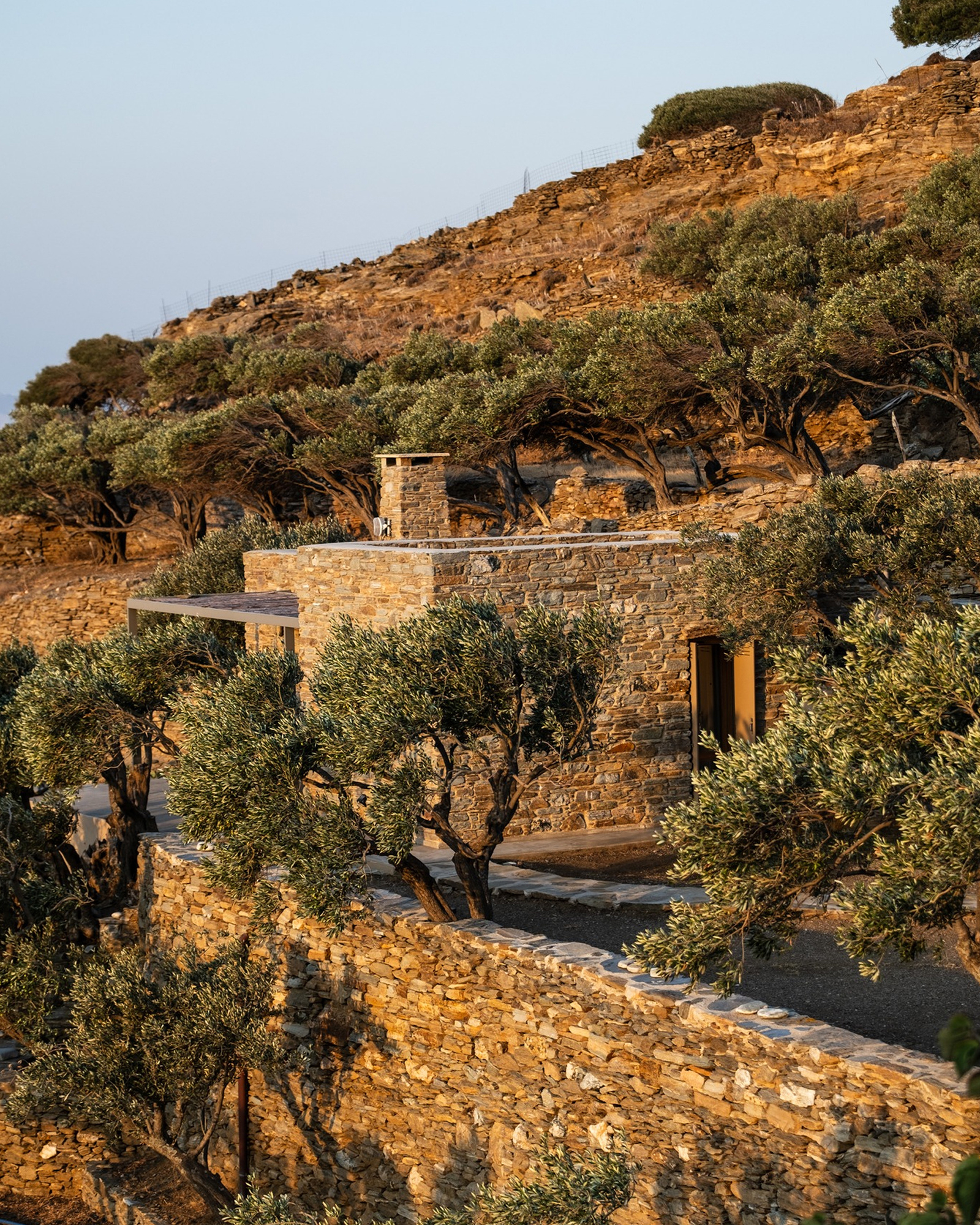
The house stands on the footprint of an old farmhouse, the kind once used to shelter animals and the people who tended them. Vidali’s answer to the ruin was to build as the island does, in the local vernacular and scale, with flat roofs and the colors of the landscape, among dry stone walls and old olive trees. Two connected units sit on a concrete plateau between the rocks, and the furniture is her own design, built by local makers. She has worked on Tinos since 2011, and wrote her doctorate on the rural landscape of the island, so this is a house by someone who knows how building here goes. In 2021, Avdos House was shortlisted among the best architectural projects in Greece in the DOMES awards.
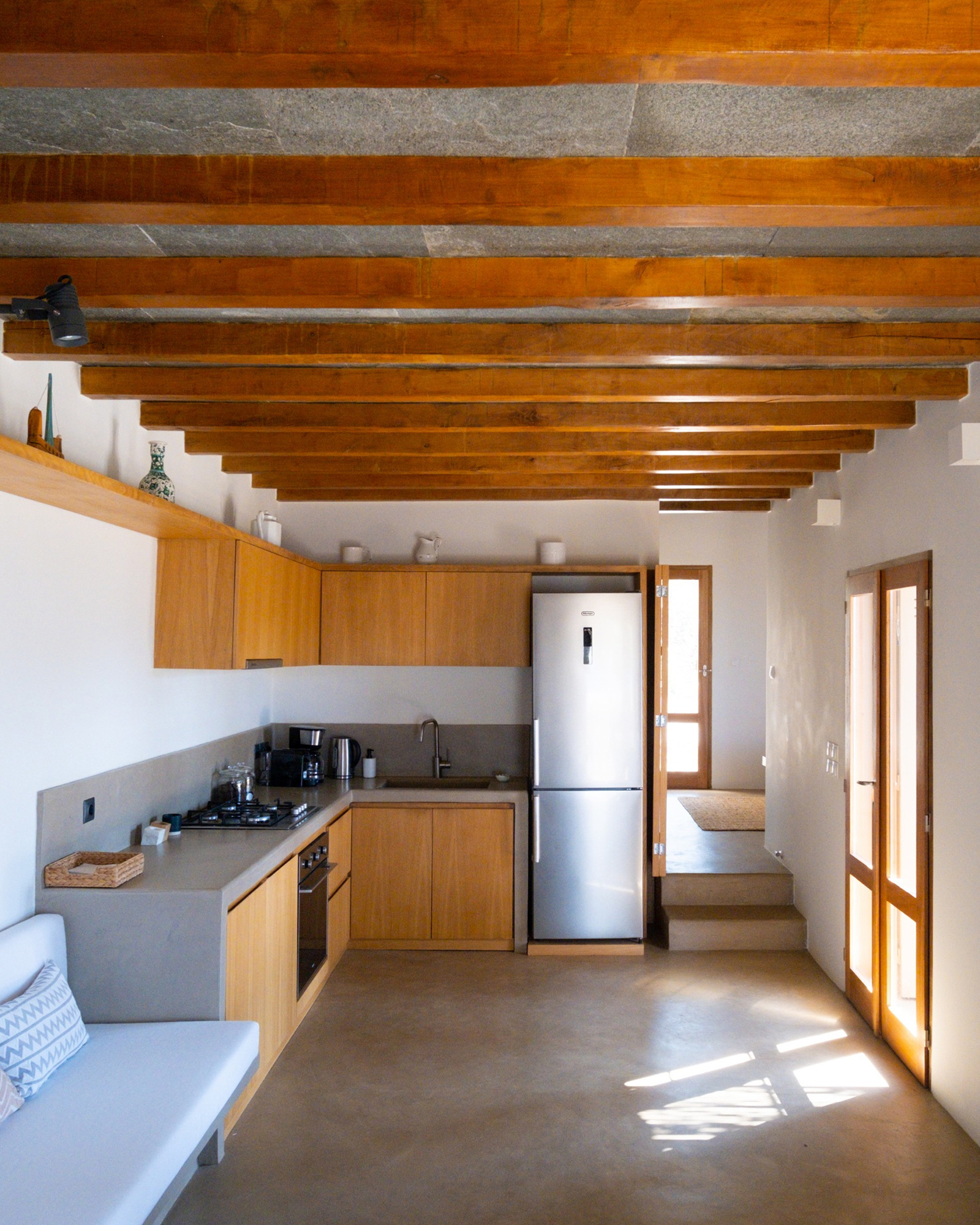
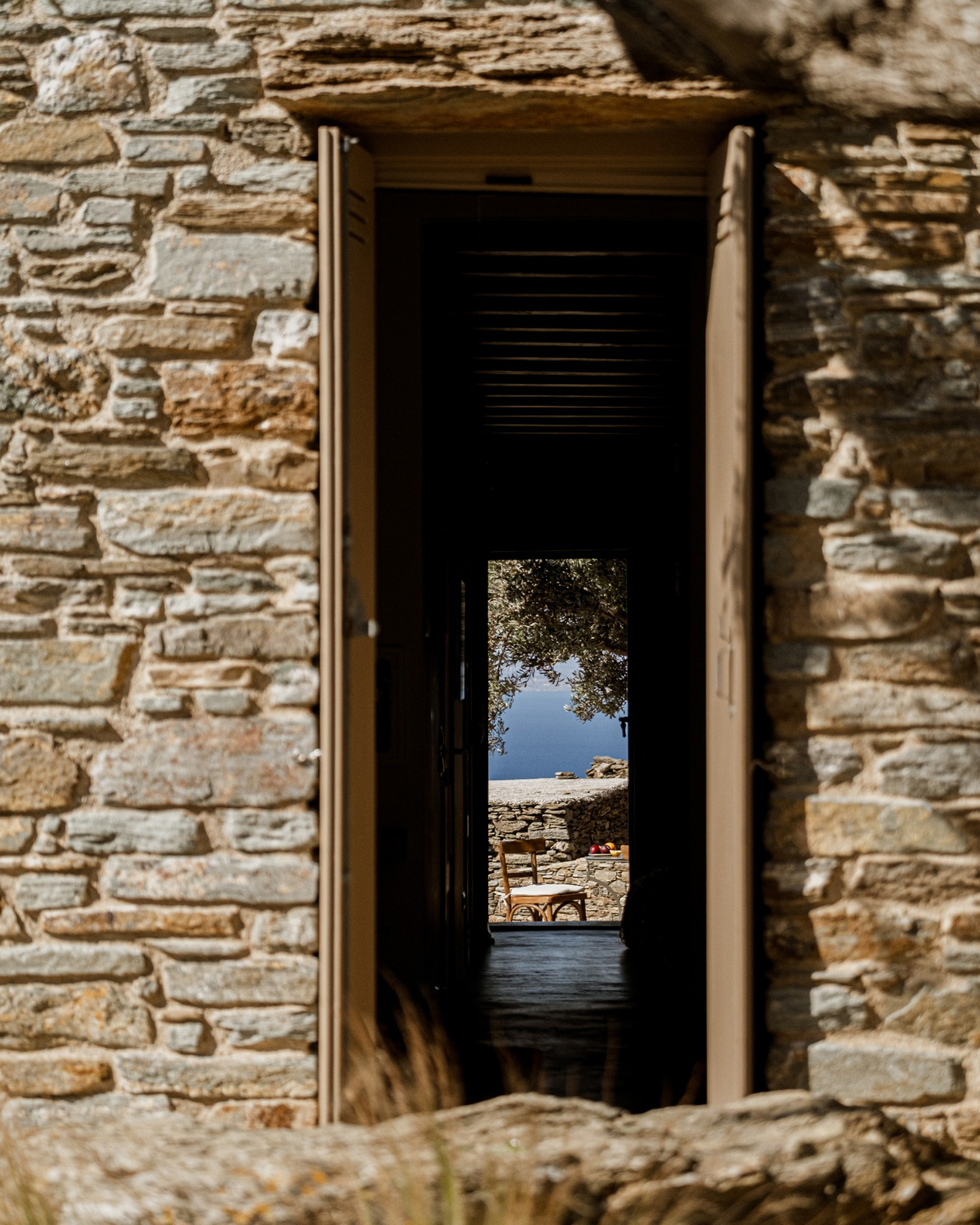
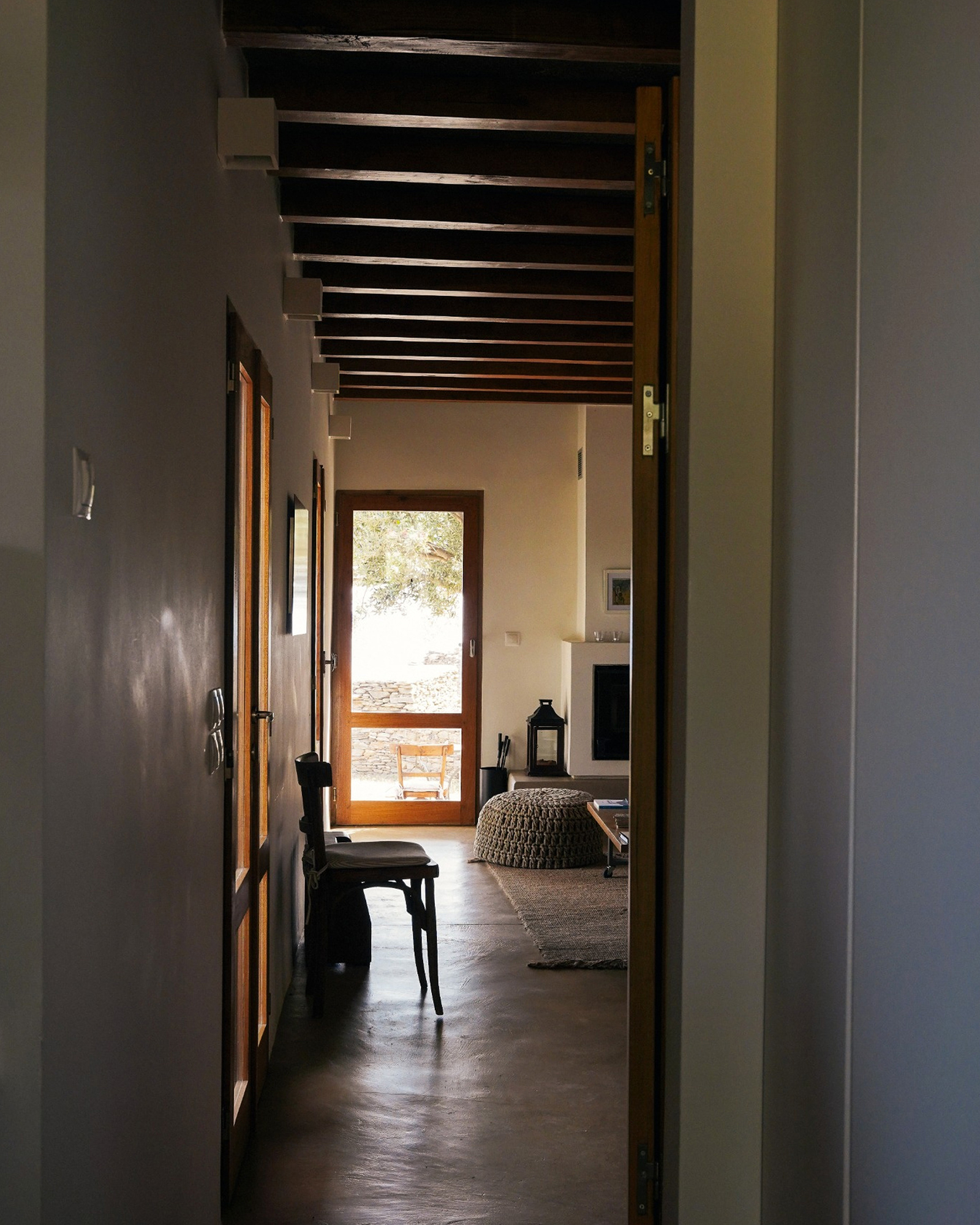
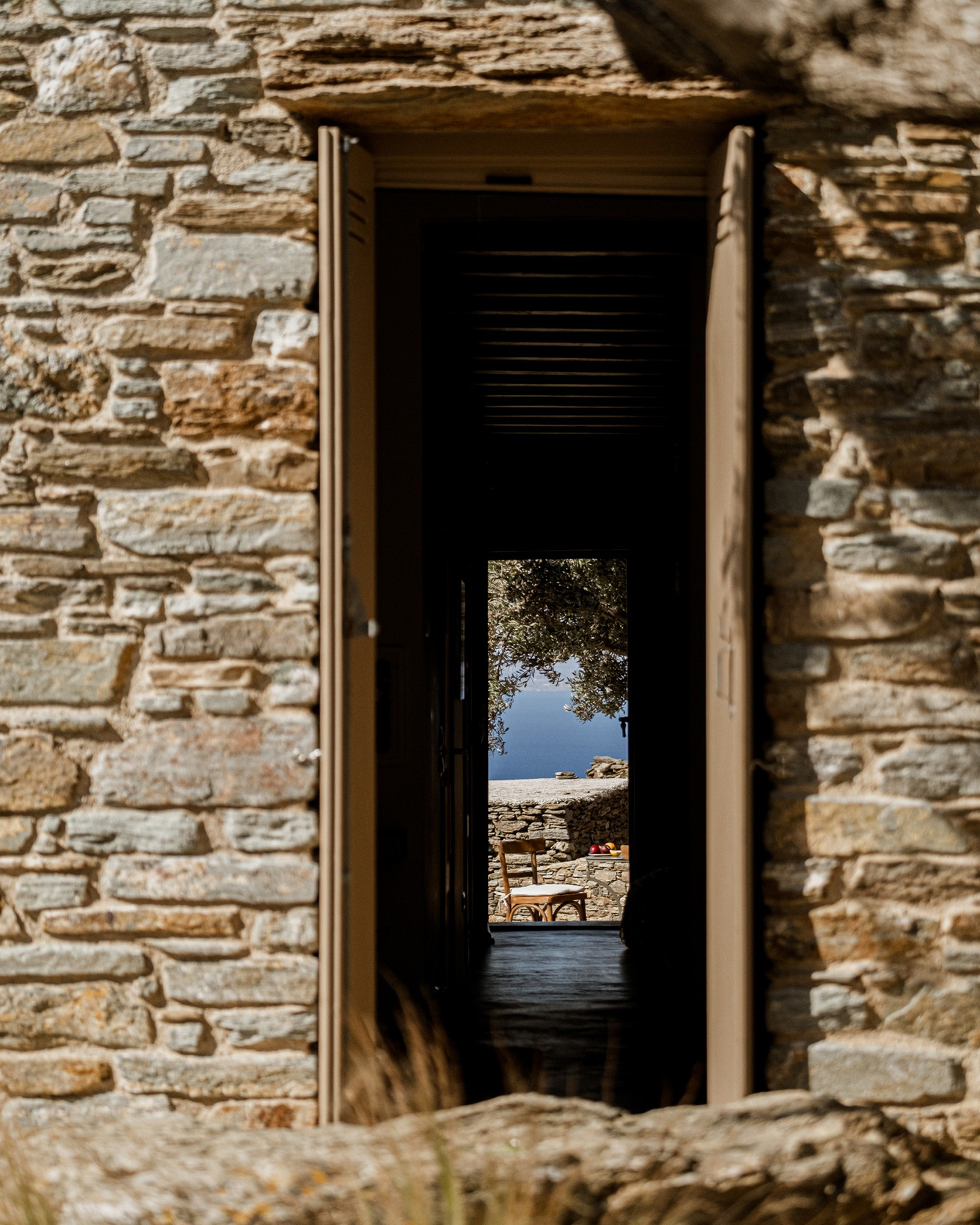
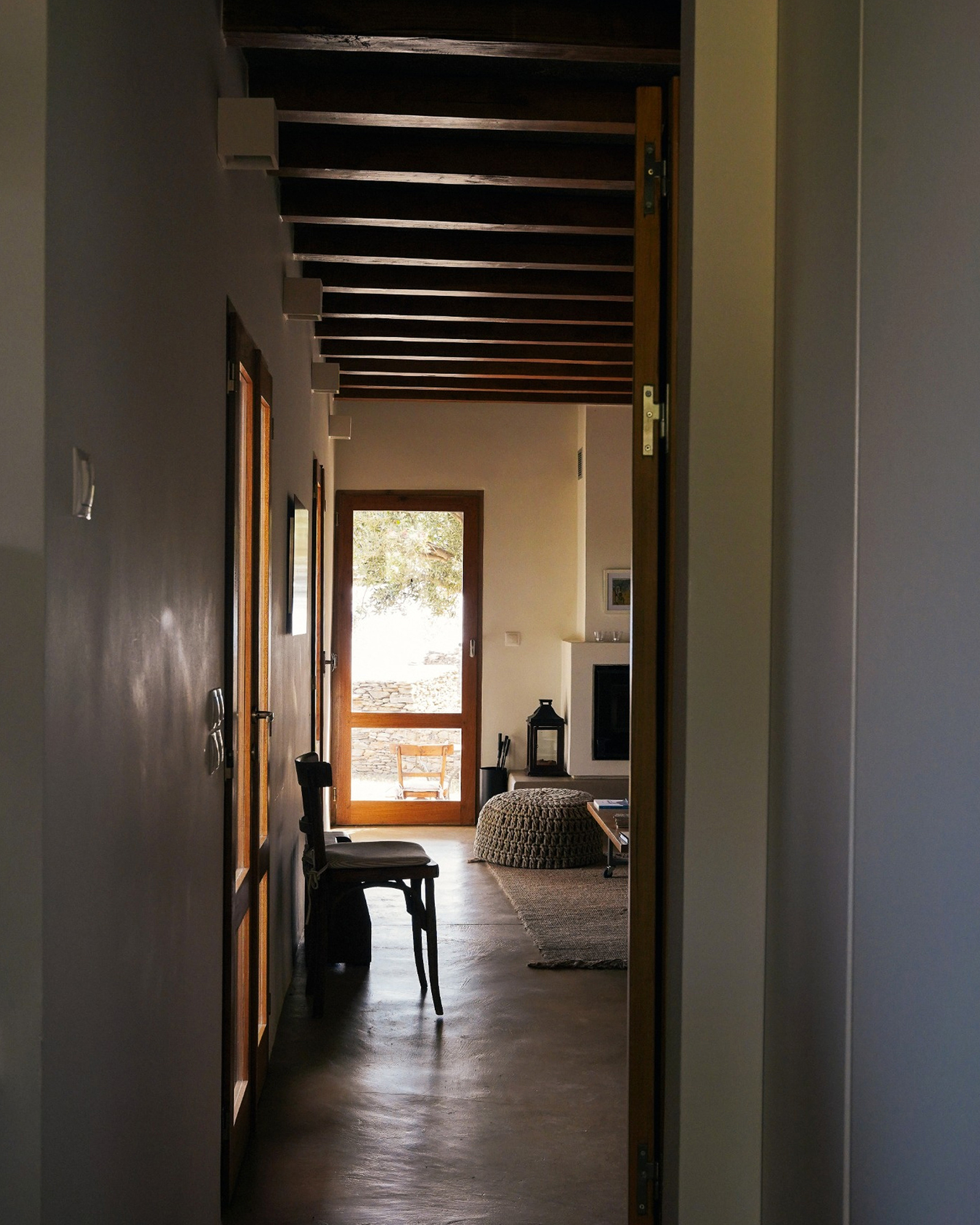
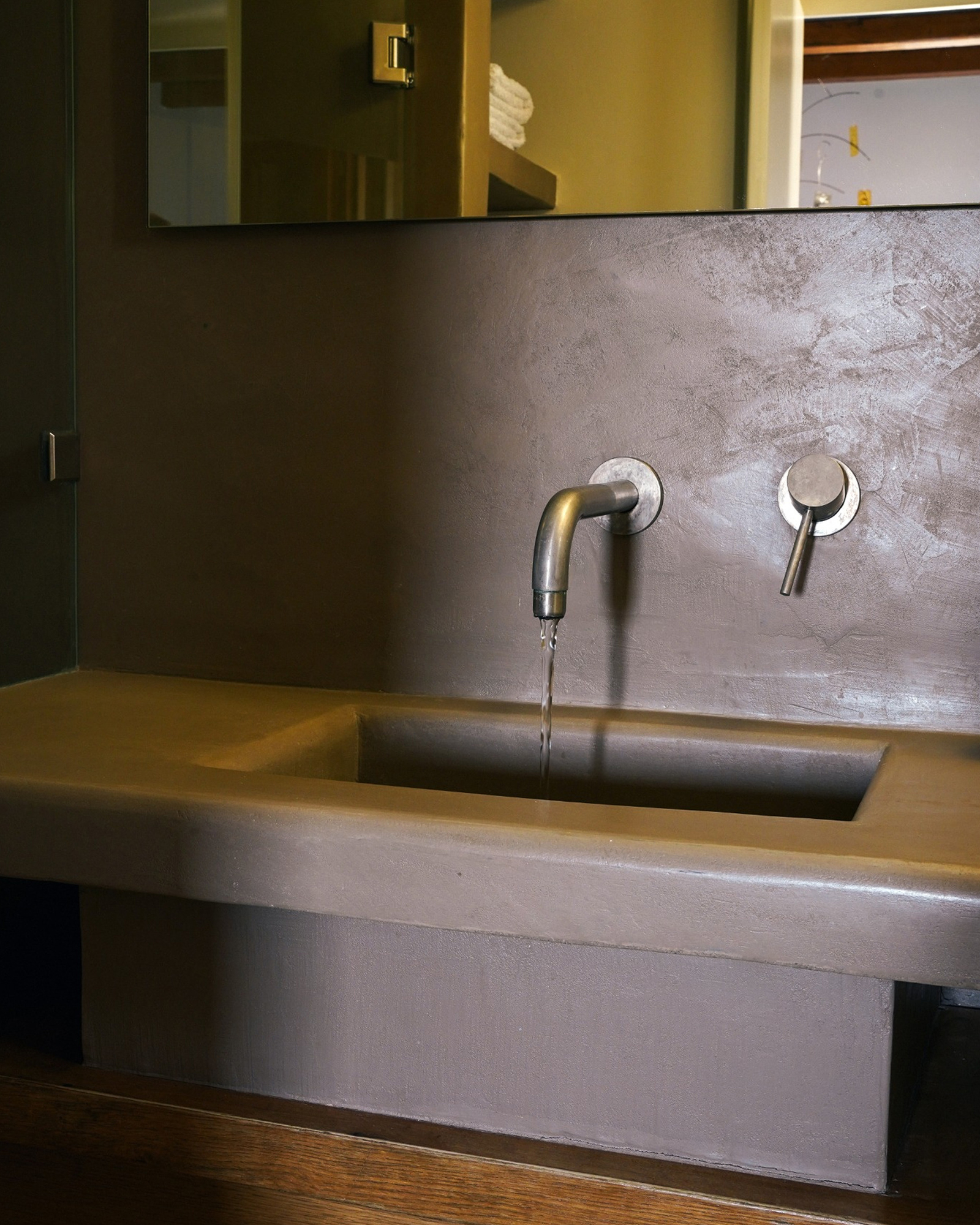
Concrete and timber carry the interior, and the ceiling is local slate on chestnut beams. The long kitchen and living room has a door at each end, placed to link the rocky hillside with the sea. It's there you'll find the hosts’ own olive oil. Outside, there’s more room than inside: a dining terrace, a hammock, the rocks and the grove. Plus, there's a friendly cat who lives in the courtyard.
The house runs on its own systems: solar panels for power and a spring on the land for water. Nothing is rationed, but the hosts ask that guests use electricity thoughtfully.
Layout
Avdos Olive House is a home of 55 m² (592 sq ft) set in 2,340 m² (about 0.58 acre) of working olive groves. It has one bedroom and one bathroom. A sleeper sofa and a floor mattress in the living area take two more guests, though the hosts say the house suits two best.
• Bedroom 1: Double bed
• Living area: Sleeper sofa, floor mattress
Good to know
A car is essential. The last 300 meters from the main road are an unpaved farm track, which an ordinary rental car can manage in dry weather at walking pace. If you’re arriving for the first time after dark, message the hosts and they’ll talk you in. There’s free parking beside the house. The grounds are open land, with unfenced edges, changes of level and no railings, which is deliberate, and it’s why children under 10 aren’t accepted. Water is heated by the sun, so several overcast days in a row in winter and spring mean cooler showers. Mobile signal is weak in places, but there’s Wi-Fi in the house. Up to two pets are welcome. Check-in is self-service with a key box. The same family has a second home by the sea, 10 minutes away, that sleeps four to six, if you’re traveling with others.
A friendly cat lives outdoors in the courtyard, not in the house. Guests are welcome to give her some attention and to feed her; her food is kept under the kitchen sink.
The Climate Crisis Resilience Fee of €8 per guest per night applies to guests over 12 years old. If children are part of the group, it can be adjusted.
Amenities & services
Sea and mountain views, private entrance, private courtyard, private garden (not fully fenced), outdoor dining area, patio furniture, hammock, beach gear (towels, chairs and umbrella), free parking, fireplace, heating, full kitchen, refrigerator, freezer, gas stove and oven, cooking basics, dishes and silverware, filter coffee maker, Nespresso machine, toaster, coffee, washing machine, iron and ironing board, hangers, wardrobe, extra pillows and blankets, mosquito net, towels and bed linen, hair dryer, shampoo, conditioner, handmade soap and shower gel, cleaning products, TV, sound system, books, Wi-Fi, smoke alarm, carbon monoxide alarm, fire extinguisher, first aid kit, solar panels, recycling, pets allowed (up to two), self check-in with key box, long stays of 28 days or more.
Around
The west side of Tinos is the quiet side: terraced hillsides, dovecotes, and undisturbed villages. Most beaches are about 10 minutes away by car, a few with a short walk at the end. To the south, Agios Romanos is a long sandy bay with trees for shade, Apigania has turquoise water between rocks and is reached on foot from the road, and Kantani beyond it suits people who like a scramble. To the north, Kalyvia is sandy and shallow, with a beach bar, Agios Petros has two sandy beaches and little else, and Kardiani and Isternia have pebbles, fishing boats and tavernas over the water. For groceries, there are supermarkets in Chora, at the port, with small shops in Isternia and larger ones in Pyrgos.
We recommend Pyrgos, where the island’s marble sculptors still work, and Volax, a valley scattered with enormous round boulders. In summer, a panigiri, a village festival with food, wine and music until morning, falls somewhere on the island almost every week, and the hosts will tell you which one lands in your week.
Location
Tinos, Cyclades, Greece. Tinos has no airport. The nearest is Mykonos (JMK), and the ferry from Mykonos to Tinos takes 20 to 35 minutes. Ferries also run from Rafina and Piraeus, near Athens.
Best time to visit
Summer is the season for village festivals, with one somewhere on the island almost every week, and the solar-heated water runs warmest. In the cooler months, the fireplace keeps the house warm and the island is at its quietest.